Category: Retro Gaming

Celebrating the classics: 8-bit, 16-bit, arcade, and the golden age of console gaming.

  • Crazy Taxi Review — Is Sega’s 1999 Dreamcast Arcade Classic Still Worth Playing in 2026?

    Crazy Taxi Review — Is Sega’s 1999 Dreamcast Arcade Classic Still Worth Playing in 2026?

    Title Crazy Taxi
    Developer Hitmaker
    Publisher Sega
    Year 1999 (arcade), 2000 (Dreamcast)
    Platform focus Dreamcast original release
    Genre Arcade driving / score attack
    Score 8 / 10

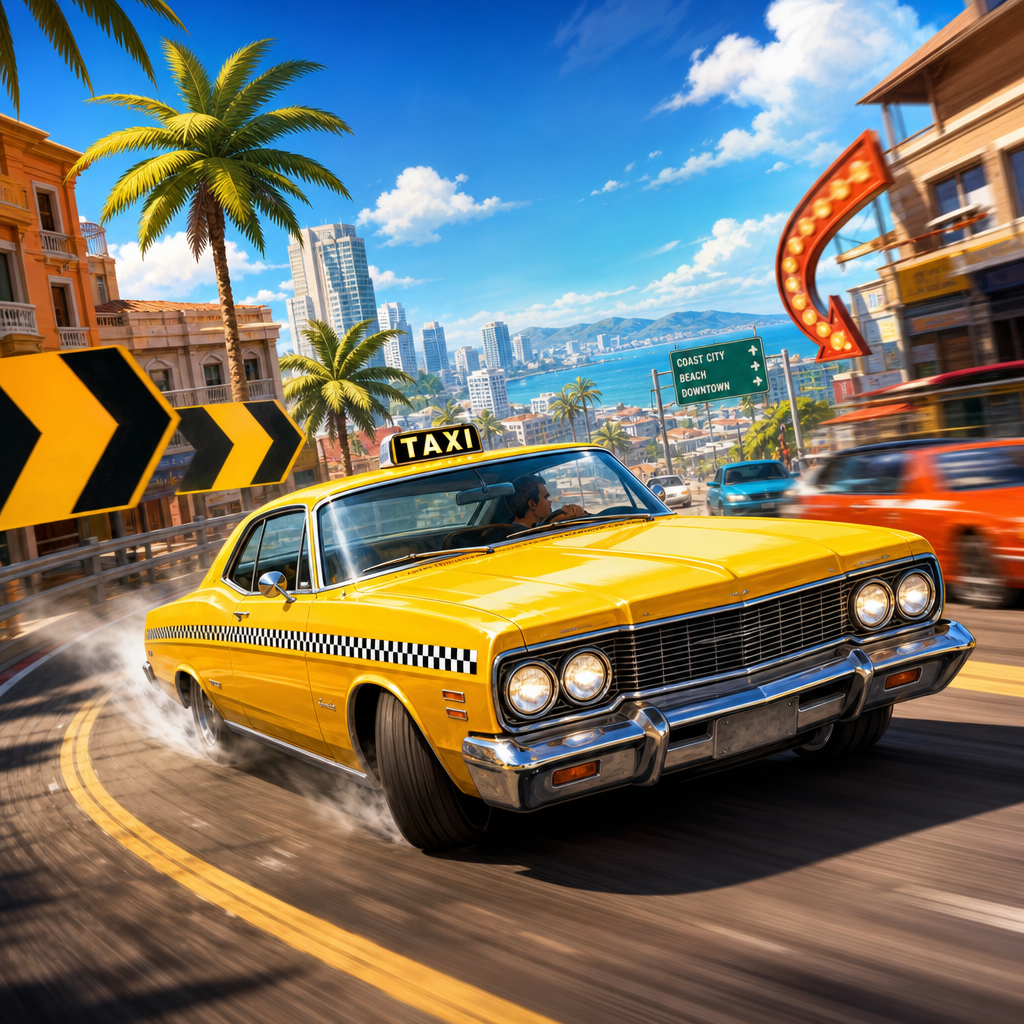
    Crazy Taxi still asks a very healthy retro question in 2026: if you strip away nostalgia, licensed music memories, and Dreamcast affection, is Sega’s arcade taxi riot actually still fun to play today? I think the answer is yes. More than that, I think it is one of the easiest Dreamcast games to recommend to someone who wants instant action instead of homework. Few retro games explain themselves this quickly, and even fewer turn a simple idea into such a compulsive score chase.

    The pitch is wonderfully blunt. Pick up a fare, race to the destination, drive like a menace, and squeeze out extra cash with wild drifts, near-misses, and risky shortcuts before the clock runs dry. That loop sounds almost too thin on paper, but Crazy Taxi understands exactly what makes arcade design stick. It throws you into a city that feels open enough to invite improvisation, then rewards aggression, route knowledge, and nerve. Within minutes, you stop driving safely and start thinking like a greedy speed demon.

    Why Crazy Taxi Still Feels So Good

    The biggest strength is momentum. Crazy Taxi feels fast in the way older arcade games often did: not because of realism, but because every second is charged with consequence. The timer is always threatening you, passengers are always judging you, and the city always seems one bad corner away from disaster. That pressure gives even ordinary fares a lovely sense of chaos.

    I also think the game’s readability deserves more credit. The giant directional arrow is such a smart piece of design. It keeps the pace high without turning the city into a confusing maze, which means the real skill comes from learning better routes rather than fighting the interface. Like Out Run, this is an arcade Sega game that understands movement should feel playful before it feels technical.

    The tone helps too. This is not a serious driving sim pretending to be a city sandbox. It is loud, silly, and proudly gamey. Customers leap into the cab, destinations flash up, and every successful drop-off makes you want to chain one more run together. There is a purity to that which still lands beautifully in 2026, especially if you miss the more rebellious side of old Sega design we talked about in our feature on Sega’s surviving classic reboots.

    Where the Age Shows

    The downside is that Crazy Taxi is not especially deep once the initial rush settles. The map is memorable, but the activity range is narrow by design. If you need story, progression systems, or a sense that the world changes around you, this will feel slight very quickly. It is an arcade machine at heart, and it never pretends otherwise.

    The collision-heavy chaos can also be messy in ways that are funny right up until they are not. Part of the charm is clipping traffic, bouncing off street furniture, and somehow salvaging the fare anyway. Part of the frustration is realising a strong run can evaporate because you misread a turn or got tangled in the city’s louder physics. Compared with the smoother style-first flow of Jet Set Radio, Crazy Taxi is more immediately accessible, but it can still feel rough around the edges.

    Why It Is Still Worth Playing in 2026

    What keeps it alive is how little fat there is on the whole thing. You can sit down for ten minutes and get exactly what you came for: speed, risk, noise, and the satisfaction of shaving seconds off a route you already thought you understood. That makes it one of the better answers to an evergreen collector-and-curiosity search: which Dreamcast games are still genuinely fun, not just historically important?

    I would not call it the richest game in Sega’s back catalogue, but I would absolutely call it one of the cleanest expressions of arcade fun the company ever shipped. If you enjoy score attack design, chasing mastery, or simply yelling at traffic while punk music blares in the background, Crazy Taxi still earns its place.

    Verdict

    Crazy Taxi remains a terrific burst of arcade energy: simple, reckless, readable, and immediately entertaining. It lacks the depth to dominate long sessions in the way some all-time greats do, but as a pick-up-and-play Dreamcast classic it still feels sharp, funny, and very easy to recommend.

    8 / 10. If you want a retro game that gets to the fun in seconds and keeps daring you to drive worse for better results, Crazy Taxi still delivers.

    • Play tip: Learn a few dependable shortcuts before chasing maximum-risk routes; steady knowledge beats panic speed.
    • Play tip: Use the directional arrow as a guide, not a command. The fastest route is often not the most obvious road.
    • Authority link: Wikipedia overview of Crazy Taxi
    • Authority link: MobyGames entry for Crazy Taxi

    Would you still put Crazy Taxi near the top of the Dreamcast pile, or has one-note arcade brilliance become a tougher sell for you in 2026?
  • Jet Set Radio Review — Is Sega’s 2000 Dreamcast Cult Classic Still Worth Playing in 2026?

    Jet Set Radio Review — Is Sega’s 2000 Dreamcast Cult Classic Still Worth Playing in 2026?

    Title Jet Set Radio
    Developer Smilebit
    Publisher Sega
    Year 2000
    Platform focus Dreamcast original release
    Genre Action platformer / skating / graffiti game
    Score 8 / 10

    Jet Set Radio still attracts a very specific retro question in 2026: if you want a stylish Dreamcast game that feels different from almost everything else Sega ever made, is this still worth playing or is it mostly remembered for the soundtrack and cel-shaded look? I think it is still worth your time, but with a small warning label attached. At its best, it feels like Sega trying to turn motion, attitude, and street noise into a playable cartoon. At its worst, it reminds you that cool ideas do not always mean comfortable controls.

    That tension is part of why the game still matters. Jet Set Radio is not just “the graffiti one” or a relic people bring up whenever cel-shading gets mentioned. It is a proper design swing. You skate through Tokyo-to, claim turf with spray paint, dodge increasingly aggressive police, and try to keep your speed while the camera and collision occasionally conspire against you. It can be messy. It can also be completely exhilarating.

    Why Jet Set Radio Still Feels Special

    The obvious strength is the presentation. Even now, the thick lines, loud colours, and pirate-radio energy feel more alive than plenty of technically cleaner games. Sega built a world that looks rebellious without becoming visually muddy, and the soundtrack does a huge amount of work. The mix of funk, hip-hop, and electronic tracks gives every area its own pulse. Like Out Run, this is a Sega game where style is not decoration; style is the point.

    I also still like how committed it is to movement as expression. You are not just travelling from objective to objective. You are grinding rails, hopping gaps, tagging walls under pressure, and learning the awkward little shape of each district. When it clicks, the whole thing feels gloriously rude and playful. That is a big reason the game keeps surfacing whenever people talk about Sega’s lost classics or the appeal of the company’s announced reboot push, something we touched on in our piece about Sega’s classic reboots surviving the Super Game shake-up.

    Where the Dreamcast Age Shows

    The catch is that Jet Set Radio can be more stubborn than nostalgic memory admits. The skating has momentum, but it is not always the friendly kind. Tight turns, fiddly landings, and camera angles that refuse to cooperate can make basic navigation harder than it should be. The graffiti input system is clever for a while, especially because it makes tagging feel like an action instead of a menu choice, but during hectic moments it can slip from stylish to slightly annoying.

    The police escalation is another mixed blessing. Conceptually, I love it. The city pushing back harder as your crew gets bolder fits the whole anti-authority mood perfectly. In practice, some late-game sequences feel more stressful than elegant, especially when control friction piles on top of enemy pressure. This is not the kind of Dreamcast classic I would recommend to everyone without qualification.

    Why It Is Still Worth Playing in 2026

    What saves it is that nothing else really replaces it. Plenty of games borrowed bits of its look or attitude, but very few captured the same mix of skating, graffiti, music, and urban mischief. Even now, Jet Set Radio feels like a glimpse of a stranger version of mainstream Sega, one that was happy to be loud, specific, and a bit difficult to love cleanly. That counts for a lot.

    It also remains a strong answer to an evergreen collector-and-curiosity search: which Dreamcast games are still worth playing for more than historical value? Jet Set Radio makes the list because its identity is still stronger than its flaws. You will notice the rough edges, definitely. You will probably forgive many of them too, because the game keeps throwing personality at you faster than most rivals can manage polish.

    Verdict

    Jet Set Radio is still one of the Dreamcast’s boldest originals: stylish, noisy, distinctive, and occasionally maddening. The camera, handling, and pressure spikes stop it short of greatness for me, but the look, music, and sense of attitude still make it easy to recommend to anyone curious about Sega’s most creative era.

    8 / 10. If you can tolerate some turn-of-the-millennium awkwardness, Jet Set Radio is still one of retro gaming’s coolest imperfect classics.

    • Play tip: Treat early runs as navigation practice. Learning rail routes and cornering lines helps more than rushing objectives.
    • Play tip: If the police pressure starts spiralling, back off and regain rhythm instead of forcing every tag immediately.
    • Authority link: Wikipedia overview of Jet Set Radio
    • Authority link: MobyGames entry for Jet Set Radio

    Do you still love Jet Set Radio for the vibe alone, or do its rough controls keep it just outside your all-time Dreamcast top tier?

  • Mega Man X Review — Is Capcom’s 1993 SNES Classic Still Worth Playing in 2026?

    Mega Man X Review — Is Capcom’s 1993 SNES Classic Still Worth Playing in 2026?

    Title Mega Man X
    Developer Capcom
    Publisher Capcom
    Year 1993
    Platform focus SNES original release
    Genre Action platformer
    Score 9 / 10

    Mega Man X still turns up in a very practical retro search in 2026: if you want a fast SNES action game that does not feel trapped by 16-bit stiffness, is Capcom’s 1993 classic still the one to start with? I think it probably is. It took the familiar Mega Man formula, stripped away some of the old friction, and replaced it with a cleaner, more aggressive rhythm built around dashing, wall-jumping, and hunting for upgrades that genuinely change how confident you feel.

    What still grabs me is how quickly it sells momentum. Within minutes, Mega Man X feels sharper and more athletic than its 8-bit ancestors. X is not just a careful jump-and-shoot hero; he is a machine built to attack space. The wall climb opens vertical routes, the dash changes combat timing, and the hidden armour parts turn exploration into something more exciting than simple item collection. Where Super Metroid uses atmosphere and isolation to pull you deeper, Mega Man X wins by making movement itself feel cool.

    Why Mega Man X Still Feels Fresh

    The great trick is how modern the controls still feel. Dashing under enemy fire, bouncing off walls, and chaining shots through busy stages gives the game an energy many early 1990s action platformers still cannot match. It is demanding, but rarely clumsy. Even when you fail, the game usually makes you think about route choice, weapon use, or upgrade timing rather than blaming awkward controls.

    The stage design helps a lot. Each Maverick level has its own identity without becoming gimmicky for too long: collapsing highways, power plants, mine carts, frozen bases, and forest ruins all push different skills while staying readable. That clarity is a huge reason the game still has evergreen appeal. Players searching for the best SNES action platformer are usually not just chasing nostalgia; they want something that still feels responsive. Mega Man X absolutely does.

    The upgrade hunt gives it lasting replay value too. Heart tanks, sub-tanks, armour capsules, and boss weapons create the kind of satisfying progression loop that makes return runs easy to justify. In that sense, it shares something with Donkey Kong Country 2’s knack for rewarding curious, slightly obsessive play. Capcom’s version is more combat-focused, but the same little thrill is there when a suspicious ledge or wall turns into a meaningful advantage.

    Where the Age Shows

    It is not perfect. Some enemy patterns and knockback-heavy platforming can still feel a bit cruel, especially in stages that want precision under pressure. If you go in expecting a completely frictionless action game, a few deaths will remind you this is still a product of an era that liked teaching through punishment.

    The other weak spot is that not every Maverick encounter is equally memorable once the initial spectacle fades. The best fights reward pattern recognition and weapon planning; the weaker ones feel slightly too quick or too simple. There is also some old-school opacity around the ideal upgrade route. That mystery can be fun, but it can also send first-timers toward external guides faster than a truly seamless modern design would.

    Why It Still Matters in 2026

    Mega Man X still matters because it captures a transition point brilliantly. It respects the pick-a-boss structure of older Mega Man games, but it adds just enough mobility, speed, and style to feel like the series suddenly understood the future. You can see the DNA of later action platformers all over it, not because it was the first game to move quickly, but because it packaged challenge, exploration, and empowerment so cleanly.

    It is also still one of the best answers to a collector-and-player question that never really goes away: which SNES classics are worth playing for their mechanics rather than just their reputation? Mega Man X earns its place easily. It is slick, punchy, and confident in a way that still cuts through decades of imitators.

    Verdict

    Mega Man X is still one of the SNES’s best action games and still one of Capcom’s smartest updates to a long-running formula. A little old-school cruelty and a few lighter boss fights stop it short of absolute perfection, but its movement, pacing, and upgrade-driven replayability remain superb.

    9 / 10. If you want a retro action platformer that still feels quick, stylish, and mechanically satisfying in 2026, Mega Man X is still an easy recommendation.

    • Play tip: Prioritise movement upgrades early; the dash and armour pieces make the whole game feel better, not just easier.
    • Play tip: If a wall or ceiling looks slightly suspicious, test it. Some of the game’s best rewards are tucked just off the obvious route.
    • Authority link: Wikipedia overview of Mega Man X
    • Authority link: MobyGames entry for Mega Man X

    Do you still think Mega Man X is the best starting point for Mega Man on SNES, or has another 16-bit action favourite aged better for you?

  • Donkey Kong Country 2 Review — Is Rare’s 1995 SNES Classic Still Worth Playing in 2026?

    Donkey Kong Country 2 Review — Is Rare’s 1995 SNES Classic Still Worth Playing in 2026?

    Title Donkey Kong Country 2: Diddy’s Kong Quest
    Developer Rare
    Publisher Nintendo
    Year 1995
    Platform focus SNES original release
    Genre Platformer
    Score 9 / 10

    Donkey Kong Country 2 still lands in a very specific retro search conversation in 2026: if you want the best Donkey Kong Country game to actually play today, is the second one really the peak? I think it probably is. Rare’s 1995 sequel is tougher, moodier, and more inventive than the original, and it still feels like one of the sharpest examples of how the SNES could turn movement, atmosphere, and hidden-route design into something that keeps pulling you forward.

    What impresses me most is how confident it is about escalation. The first game established the look and feel; this one immediately starts finding smarter ways to use them. Stages feel busier without becoming unreadable, secrets feel tempting rather than arbitrary, and the pirate theme gives the whole adventure a stronger identity than many mascot platformers ever manage. Where Super Mario World still feels smoother and more welcoming, Donkey Kong Country 2 feels more dramatic and slightly more mischievous. It wants you to earn the good stuff.

    Why Donkey Kong Country 2 Still Hooks You

    The level design is the big reason this game still matters. Rare keeps introducing memorable spaces without leaning too hard on any one gimmick: haunted woods, bramble mazes, rollercoaster tracks, lava-lit climbs, and shipwreck interiors all have their own rhythm. Even decades later, a lot of platformers struggle to make environments feel this distinct. Donkey Kong Country 2 does it while still keeping the action readable enough that failure usually feels like your mistake, not the game’s.

    Diddy and Dixie make a great pair, too. Diddy is quick and nimble, Dixie’s helicopter spin adds just enough forgiveness, and swapping between them gives the game a quiet tactical layer. That extra mobility is a big part of why it still feels so replayable in 2026. You are not just surviving each obstacle; you are learning cleaner, faster, more stylish ways through it. In that sense, it has something in common with A Link to the Past’s gift for rewarding curiosity with meaningful detours. The overworld is different, but the same sense of deliberate discovery is there.

    The soundtrack deserves its reputation as well. David Wise’s music does not merely decorate the levels; it shapes their mood. Tracks like the bramble and water themes still give the game a strange, almost dreamy texture that helps it stand apart from louder, more straightforward platformers of the era. That atmosphere is a huge part of why people still search for this game specifically instead of just “good SNES platformers.” It has a personality all its own.

    Where the Age Shows

    It is not flawless. The difficulty can spike sharply, especially if you are chasing bonus rooms, DK coins, or a cleaner completion run. Some enemy placement is clearly designed to make you repeat sections until the timing settles into muscle memory. I do not mind that much, but it does mean the game can feel more demanding than its colourful presentation suggests.

    There is also a little bit of 1990s friction in the way some secrets are signposted. Most hidden areas feel fair once you know how the game thinks, but a few bonuses still rely on the sort of leap-of-faith experimentation that can push modern players toward a guide. The mine cart and animal buddy stages are brilliant, yet they can also turn a relaxed session into a slightly sweaty one very quickly.

    Why It Still Matters in 2026

    Donkey Kong Country 2 still matters because it sits in a sweet spot many retro platformers miss. It has enough spectacle to feel special, enough challenge to stay satisfying, and enough mechanical precision to survive beyond pure nostalgia. You can come back for the music, the pirate aesthetic, the completion chase, or the argument about whether this is better than the original, and the game supports all of those reasons surprisingly well.

    It is also one of the strongest answers to an evergreen collector-and-player question: which SNES platformers still feel genuinely essential once the nostalgia fades? Donkey Kong Country 2 is absolutely on that shortlist. It asks more of you than some peers, but it gives back atmosphere, variety, and momentum nearly every step of the way.

    Verdict

    Donkey Kong Country 2 is still one of the SNES’s best platformers and still, for me, the high point of the original trilogy. Its tougher edges and occasional secret-hunting friction stop it just short of feeling universally effortless, but its level design, soundtrack, and sense of adventure remain superb.

    9 / 10. If you want a 16-bit platformer with richer atmosphere, trickier stages, and more personality than most of its rivals, Donkey Kong Country 2 is still very easy to recommend in 2026.

    Does Donkey Kong Country 2 still top your Donkey Kong ranking, or do you think another 16-bit platformer has aged better?

  • Super Mario World Review — Is Nintendo’s 1990 SNES Classic Still Worth Playing in 2026?

    Super Mario World Review — Is Nintendo’s 1990 SNES Classic Still Worth Playing in 2026?

    Title Super Mario World
    Developer Nintendo EAD
    Publisher Nintendo
    Year 1990
    Platform focus SNES original release
    Genre Platformer
    Score 10 / 10

    Super Mario World still gets hit with one very practical retro question in 2026: if you want the best 2D Mario game to actually play today rather than simply respect from a distance, is Nintendo’s 1990 SNES classic still the answer? I think it probably is. Not because it is the hardest, strangest, or most sentimental entry in the series, but because it remains one of the cleanest examples of how to make movement, level design, and discovery feel joyful without wasting a second.

    What keeps it alive is how effortlessly readable it still is. Within minutes, the game teaches you how it thinks: how a jump should feel, how secrets are hinted at, how momentum can save you or betray you, and how the world map quietly turns a straightforward platformer into a miniature adventure. Where Sonic the Hedgehog 2 still wins on pure speed and attitude, Super Mario World feels more precise, more generous, and more endlessly replayable. And where A Link to the Past shows how strong the SNES was at elegant world design, this is the platforming equivalent: a game that makes craft look effortless.

    Why Super Mario World Still Feels So Good

    The obvious headline is movement. Mario has enough weight to make every jump count, but never so much that he feels stiff. Running, spinning, bouncing, flying, and recovering from small mistakes all click together with an ease that modern platformers still chase. The cape is the masterstroke. It gives the game an extra layer of expression, turning ordinary levels into spaces you can merely survive, confidently dominate, or practically dance through once the rhythm settles in.

    The level design is just as sharp. Nearly every stage introduces one idea, pushes it far enough to stay memorable, then gets out before the gimmick sours. That discipline is why the game still works for first-timers, lapsed Nintendo fans, and people searching for the best SNES platformer in 2026. It is constantly playful without ever feeling messy. Ghost Houses, fortress stages, secret exits, and the branching overworld all keep feeding the sense that there is always one more clever detour worth checking.

    Yoshi deserves some credit too, even beyond the nostalgia. He is not just a mascot flourish; he changes how you read levels, how safely you approach hazards, and how much room the game gives you to improvise. That small increase in forgiveness is part of why Super Mario World remains such an easy recommendation. It is welcoming without becoming bland.

    Where the Age Shows

    For all its elegance, it is not completely frictionless. Some secret exits are cryptic enough that modern players may suspect they missed a rule rather than a clue. The cape, brilliant as it is, can also flatten parts of the challenge once you fully understand it. A few later stages become easier to bypass than to master, which is fun but does slightly soften the difficulty curve.

    The other thing time reveals is that the boss roster is not the game’s strongest asset. The core stage design is so inventive that several castle encounters feel surprisingly slight beside it. They are not bad, just less memorable than the journey between them.

    Why It Still Matters in 2026

    Super Mario World still matters because it shows how timeless platforming can be when the fundamentals are this polished. It does not need elaborate cinematics, upgrade trees, or a mountain of collectibles to keep you engaged. It trusts readable spaces, superb controls, and a steady stream of tiny surprises. That confidence makes it feel fresh long after many technically newer games start to seem cluttered.

    It is also still one of the best answers to an evergreen search query: what retro game can you hand to almost anyone and feel confident it will click? Speedrunners, kids, older players returning to the SNES, and curious newcomers all get something slightly different from it, but the design meets them cleanly every time.

    Verdict

    Super Mario World is still one of the best platformers ever made and still one of the safest retro recommendations you can give in 2026. A few lightweight boss fights and some occasionally obscure secrets stop it from feeling completely perfect in a modern sense, but its movement, structure, and sheer generosity remain extraordinary.

    10 / 10. If you want the best 2D Mario game that still feels bright, playable, and almost impossibly well-built decades later, Super Mario World still earns its crown.

    Does Super Mario World still top your 2D Mario ranking, or has another side-scrolling favourite stolen that spot over the years?

  • Banjo-Kazooie PC Port Release Date: What Light House Actually Adds in July 2026

    Banjo-Kazooie PC Port Release Date: What Light House Actually Adds in July 2026

    Banjo-Kazooie is getting another native PC port, and this one looks like it is aiming squarely at the people who never really stopped poking at Rare’s 1998 collectathon. If you have been searching for the Banjo-Kazooie PC port release date, what Light House actually does, or whether this is more than just another tech-demo curiosity, the short version is this: Harbour Masters says the project is due in July 2026, and its headline features include widescreen support, higher frame rates, a standalone randomiser, and online co-op.

    That is a strong pitch already, but the more interesting part is who is making it. Harbour Masters has built a solid reputation in the fan-port space thanks to projects around Ocarina of Time, Majora’s Mask, Mario 64, and other Nintendo 64-era classics. So this is not just “someone got Banjo running on a laptop.” It looks more like another serious preservation-and-playability push for one of the console’s most beloved games.

    Why this Banjo-Kazooie PC port matters

    According to Time Extension’s report and Harbour Masters’ own teaser video, Light House is being built from the 2024 Lighthouse decompilation project rather than through recompilation. That distinction matters if you care about mods, long-term tinkering, or whether a project feels alive after launch instead of merely functional.

    Decompilation-based ports tend to be a bigger playground. They are usually easier to modify, easier to study, and easier for fan communities to keep extending. In practice, that means the Banjo scene is not just getting a cleaner way to replay the original game on PC. It is getting a new hub for hacks, experiments, challenge runs, and bizarre community inventions.

    That fits neatly with the bigger pattern we have already talked about in The Retro Renaissance Is Real: classic games are no longer surviving on nostalgia alone. They are being rebuilt, repackaged, and made convenient again. In 2026, convenience is half the battle.

    What Light House adds beyond “it runs on PC”

    The obvious features are the ones you would expect in 2026: widescreen support and enhanced frame rates. Those are nice, but not exactly shocking anymore. The more interesting hooks are the ones that sound like they could actually change how people revisit the game.

    Harbour Masters says Light House will include a standalone randomiser that can shuffle abilities and collectibles, plus online co-op. That last feature is the real eyebrow-raiser. Banjo-Kazooie has always felt like such a solitary, odd little adventure that hearing “online co-op” attached to it sounds faintly ridiculous in the best possible way.

    The teaser also shows support for well-known ROM hacks and mentions compatibility goals around projects made with Banjo’s Backpack. That gives this story more weight than a standard fan-port announcement. This is not just about replaying Mumbo’s Mountain in cleaner resolution. It is about turning Banjo-Kazooie into a more open, flexible platform for the people still obsessing over it.

    The catch: this is still unofficial, and you need your own copy

    There is, of course, a catch. As with other fan PC-port projects, this is not an official Rare or Xbox release, and players are still expected to provide their own original copy of the game. So if your search intent is “Can I just download Banjo-Kazooie on Steam next month?”, the answer is no. This lives firmly in the enthusiast lane.

    That does limit the audience a bit, but probably less than it used to. Plenty of retro players are already comfortable with fan patches, FPGA hardware, translation projects, and unofficial preservation work. Stories like our recent Vectrex Mini collector update show the same broader truth: old games stay relevant when someone keeps doing the fiddly work of making them usable, desirable, or newly interesting.

    The Happy Fragger take

    Honestly, I think this looks more exciting than the average “classic game, now on PC” headline. Banjo-Kazooie is already playable in a few different ways if your only goal is basic access. Light House matters because it sounds like it could become the messy, moddable, communal version of Banjo-Kazooie that the fan scene has been building toward for years.

    If Harbour Masters sticks the July landing, this could become the default answer to a very practical retro question: what is the best way to play Banjo-Kazooie on PC in 2026? Not because it is official, but because it seems built by the exact kind of obsessives who understand what people still love about the game in the first place. Are you interested in a cleaner replay, or does the randomiser-and-co-op chaos sound like the real selling point here?

    Sources

  • Sonic the Hedgehog 2 Review — Is Sega’s 1992 Mega Drive Classic Still Worth Playing in 2026?

    Sonic the Hedgehog 2 Review — Is Sega’s 1992 Mega Drive Classic Still Worth Playing in 2026?

    Title Sonic the Hedgehog 2

    Developer Sega Technical Institute
    Publisher Sega
    Year 1992
    Platform focus Mega Drive / Genesis original release
    Genre Platformer
    Score 9 / 10

    Sonic the Hedgehog 2 still turns up in one very practical retro search in 2026: what is the best classic Sonic game to actually play today, not just admire from a distance? I think Sega’s 1992 sequel still makes the strongest case. It is faster, cleaner, and more confident than the first game, but it also avoids feeling like a museum relic. Plenty of 16-bit favourites survive because they were important. Sonic 2 survives because the good bits still work instantly the moment your thumbs hit the pad.

    That matters more than nostalgia. A lot of mascot platformers from the era feel cute until you ask them to be replayable. Sonic 2 still feels built for replay. The movement is snappy, the routes are easy to read at speed, and the game understands the basic pleasure of letting you feel slightly out of control without ever becoming total mush. In the same way Shinobi III still feels brilliant because Sega nailed momentum and responsiveness, Sonic 2 knows that game feel is not garnish. It is the whole point.

    Why Sonic 2 Still Works

    The first win is pace. Sonic 2 gets you moving quickly, and most of its best stages are designed around the thrill of carrying that speed through slopes, springs, loops, and split-second decisions. When people talk about old Sonic games aging badly, they are usually pointing at stop-start level design or cheap obstacle placement. Sonic 2 is not completely innocent there, but compared with many platformers of its time it still feels remarkably fluid.

    It also helps that the sequel sharpens the spectacle. Chemical Plant, Casino Night, and Sky Chase all feel distinct without becoming gimmick museums. The visual themes are loud, the music is sticky, and the set pieces arrive before any one trick wears out its welcome. Like Gunstar Heroes at Treasure’s most exuberant, Sonic 2 understands that 16-bit excess can be a virtue when the controls are strong enough to support it.

    Tails is another quiet reason the game holds up. As a co-op gimmick he is charming chaos, but even in solo play he gives Sonic 2 a warmer personality than the first game. The sequel feels bigger without becoming colder. It is still about speed, but it is also about bounce, colour, and the sense that Sega had fully figured out how to sell this world as an event.

    Where the Age Shows

    Sonic 2 is not perfect. The later zones can still be a bit mean in a very early-1990s way, especially when the game asks for precision after training you to chase flow. Metropolis Zone remains the obvious offender: longer than it needs to be, more fiddly than it should be, and a little too pleased with enemy placement that interrupts the fun rather than deepening it.

    The special stages are another mixed blessing. Their pseudo-3D presentation was dazzling at the time and still has novelty, but they can feel slippery and slightly awkward compared with the main game’s cleaner strengths. If you are chasing every Chaos Emerald in 2026, you may admire the ambition a little more than the execution.

    Why It Still Matters in 2026

    Sonic the Hedgehog 2 still matters because it remains one of the clearest examples of how to make speed readable. Modern platformers often borrow the look of 16-bit games, but fewer capture that feeling of momentum, risk, and visual clarity all working together. Sonic 2 does. It understands that velocity only feels good when the player can parse the screen quickly enough to make meaningful choices.

    It is also still one of the easiest entry points for anyone curious about Sega at its commercial peak. If you want to understand why the Mega Drive mattered, this is one of the first cartridges worth loading. It has the swagger, the soundtrack, and the mechanical snap of an era when Sega wanted every game to feel like it was trying to outrun the competition.

    Verdict

    Sonic the Hedgehog 2 is still an excellent retro recommendation in 2026. A few awkward late-game sections stop it feeling completely effortless, but the speed, spectacle, and responsiveness are still strong enough to make it one of the best classic platformers to revisit. If you are searching for the best old Sonic game, this is still the one I would hand over first.

    9 / 10. Not flawless, but still fast, charismatic, and far more replayable than plenty of modern platformers that learned the wrong lessons from the 16-bit era.

    Where does Sonic 2 land for you now: still the best 16-bit Sonic, or has another hedgehog outing aged better in your eyes?

  • Metroid Prime Review — Is Nintendo’s 2002 GameCube Classic Still Worth Playing in 2026?

    Metroid Prime Review — Is Nintendo’s 2002 GameCube Classic Still Worth Playing in 2026?

    Title Metroid Prime
    Developer Retro Studios
    Publisher Nintendo
    Year 2002
    Platform focus GameCube original release
    Genre First-person action-adventure
    Score 10 / 10

    Metroid Prime still sits near the top of a very practical retro search in 2026: what older Nintendo game actually feels worth playing now, not just historically important? I think Retro Studios’ 2002 GameCube classic still earns that recommendation with room to spare. Plenty of beloved old games survive because they were bold for their moment. Metroid Prime survives because its world design, atmosphere, and sense of discovery still feel unusually confident even by modern standards.

    The miracle is that it never really plays like a compromise. Turning Super Metroid’s lonely exploration logic into 3D should have been a mess. Instead, Metroid Prime understands exactly what mattered in the first place: readable spaces, meaningful upgrades, quiet tension, and the feeling that every new ability changes how you read the planet. In the same way Castlevania: Symphony of the Night still explains why progression-led exploration works, Metroid Prime shows how that structure can thrive in first person without collapsing into corridor shooting.

    Why Metroid Prime Still Works

    Tallon IV remains the headline. The rain-slick ruins, frozen labs, toxic caverns, and ancient machinery still feel like parts of one coherent place rather than disconnected video-game biomes. Retro Studios understood that atmosphere is not just about graphics; it is about texture, sound, and restraint. The environmental audio still does a huge amount of lifting, and the visor effects give the whole adventure a physical presence many first-person games still struggle to match.

    Then there is the scan visor, which could have been a gimmick and instead becomes one of the game’s smartest ideas. It turns curiosity into mechanics. If you want the traffic angle in one sentence, here it is: people still search for the best exploration-heavy GameCube game, and Metroid Prime keeps being the answer because it rewards paying attention. Lore, creature behaviour, machinery, and small environmental details all make the world feel denser without drowning the player in cut-scenes.

    The progression loop is just as strong. Missiles, morph ball upgrades, beams, suit upgrades and traversal tools all feel like genuine keys rather than stat bumps. Backtracking usually lands because the world folds back on itself intelligently, and because the next power-up changes how you think about spaces you already passed through. It has that same elegant readability that makes A Link to the Past still feel so clean decades later: the game trusts you to notice patterns and remember unfinished business.

    Where the Age Shows

    It is not flawless. Combat is functional rather than thrilling for long stretches, especially if you come in expecting a modern first-person shooter. Lock-on works well and keeps the focus on movement, observation, and positioning, but routine fights can feel more like maintenance than drama. A few boss battles also lean harder on endurance and pattern repetition than they do on surprise.

    The late-game artifact hunt is the other obvious friction point. It is not disastrous, but it is one of those old-school pacing decisions that feels more respectable than exhilarating. Metroid Prime is usually brilliant at making backtracking feel purposeful; the artifact stretch is where that confidence wobbles and starts to feel a bit like homework.

    Why It Still Matters in 2026

    Metroid Prime still matters because it solved a conversion problem that should have gone wrong. It took the DNA of a 2D classic and rebuilt it in 3D without losing the series’ mood or structure. That remains impressive in 2026 because plenty of modern games with bigger budgets and louder scripts still fail to create this kind of solitude, coherence, and player-driven discovery.

    It also remains one of the best entry points for anyone curious about Nintendo’s older catalogue beyond mascot comfort food. If you want a GameCube classic that still feels immersive, intelligent, and properly transportive, this is one of the easiest recommendations on the shelf. It is not just a piece of Nintendo history. It is still a world worth getting lost in.

    Verdict

    Metroid Prime is still an essential retro Nintendo game in 2026: atmospheric without being empty, clever without becoming smug, and built around a progression loop that still makes exploration feel rewarding instead of procedural. Some combat flatness and the late artifact sweep show their age, but not nearly enough to damage the larger achievement.

    10 / 10. If you want the GameCube game that best proves older 3D design can still feel elegant, moody, and genuinely absorbing, Metroid Prime remains the standard.

    Where does Metroid Prime land for you now: still the GameCube’s exploration king, or has another Nintendo classic aged better in your eyes?

  • Final Fantasy VI Review — Is Square’s 1994 SNES RPG Still Worth Playing in 2026?

    Final Fantasy VI Review — Is Square’s 1994 SNES RPG Still Worth Playing in 2026?

    Title Final Fantasy VI
    Developer Square
    Publisher Square
    Year 1994
    Platform focus SNES original release
    Genre JRPG
    Score 10 / 10

    Final Fantasy VI still sits near the top of one extremely evergreen retro search in 2026: what is the best SNES RPG to actually play, not just politely respect from a distance? I think Square’s 1994 heavyweight still has a serious claim. Plenty of beloved old role-playing games survive because they were important. Final Fantasy VI survives because it is still emotionally sharp, mechanically readable, and far less bloated than its legend can make it sound.

    It also helps that the game meets modern players halfway faster than you might expect. The opening throws you into conflict immediately, the world feels specific without drowning you in lore dumps, and the cast arrives with clean, memorable hooks. In the same way Chrono Trigger still feels startlingly brisk for a revered SNES giant, Final Fantasy VI understands pacing better than plenty of newer RPGs that learned from it.

    Why Final Fantasy VI Still Works

    The obvious headline is the ensemble cast. Terra, Locke, Celes, Edgar, Sabin, Cyan, Shadow and the rest are not all equally deep, but the game gives them distinct silhouettes, rhythms, and emotional jobs. That matters because Final Fantasy VI is at its best when it feels like a road movie with too many broken people in the same carriage. Even now, the cast sells the sense that the world is bigger than one chosen hero and one neat destiny.

    Then there is the structure. The first half moves with remarkable confidence, hopping between towns, set-pieces, and personal detours without losing the thread. The second-half shift still lands because it is not just a plot twist; it changes the mood of the whole adventure. The world suddenly feels lonelier, stranger, and more player-driven. If A Link to the Past shows how elegant SNES adventure design could be, Final Fantasy VI is the more operatic side of the same era: bigger feelings, bigger spectacle, and just enough freedom to make exploration feel personal.

    The battle system has aged better than some turn-based peers too. The Active Time Battle flow keeps fights lively, Espers give character growth enough flexibility to invite experimentation, and the game is smart about delivering memorable abilities before the system gets stale. Nobuo Uematsu’s soundtrack does a huge amount of lifting here as well. It is not nostalgia talking: the music still carries scenes with a confidence many fully orchestrated modern RPGs would envy.

    Where the Age Shows

    It is not frictionless. Random encounters can still feel over-frequent in stretches where you are trying to navigate rather than grind, and the interface carries a few of those old JRPG habits that assume you will happily dig through menus forever. The localisation is also a reminder that 1990s script constraints were real. The personality survives, but some scenes hit harder in concept than in exact line-by-line delivery.

    Character balance is another small wrinkle. The huge roster is exciting, yet it does mean some party members feel essential while others feel more like luxury picks. Final Fantasy VI usually gets away with that because the world and pacing stay so strong, but it is one of the few places where the game’s scale occasionally works against its precision.

    Why It Still Matters in 2026

    Final Fantasy VI still matters because it captures something a lot of prestige RPGs lose: scale without sludge. It feels grand, but rarely padded. Emotional, but not self-important. Mechanical, but not exhausting. If you are searching for the best entry point to classic Final Fantasy, one of the best 16-bit RPGs ever made, or simply an old game that still earns its reputation when the nostalgia fog clears, this remains one of the easiest recommendations on the shelf.

    It also stands as a reminder that 16-bit storytelling did not need voice acting or enormous cinematics to feel theatrical. A few sprites, a gorgeous soundtrack, and some ruthlessly well-judged scene direction were enough. That craft still looks impressive in 2026.

    Verdict

    Final Fantasy VI is still an essential retro RPG in 2026: rich without being baggy, emotional without becoming embarrassing, and packed with moments that explain exactly why the SNES era still inspires so many modern developers. A little menu friction and some random-encounter fatigue stop it being completely painless, but not nearly enough to blunt the magic.

    10 / 10. If you want the SNES RPG that most convincingly balances big spectacle, strong pacing, and genuine heart, Final Fantasy VI is still one of the first cartridges I would point you toward.

    Where does Final Fantasy VI land for you now: still Square’s finest 16-bit RPG, or has another classic stolen that crown?

  • The Legend of Zelda: A Link to the Past Review — Is Nintendo’s 1991 SNES Classic Still Worth Playing in 2026?

    The Legend of Zelda: A Link to the Past Review — Is Nintendo’s 1991 SNES Classic Still Worth Playing in 2026?

    Title The Legend of Zelda: A Link to the Past

    Developer Nintendo EAD
    Publisher Nintendo
    Year 1991
    Platform focus SNES original release
    Genre Action-adventure
    Score 10 / 10

    The Legend of Zelda: A Link to the Past still sits near the top of one very practical retro search in 2026: what is the best classic Zelda game to actually play, not just respectfully nod at? I think Nintendo’s 16-bit landmark still has one of the strongest claims. Plenty of old favourites survive because they were influential. A Link to the Past survives because it is still absurdly playable: fast to read, generous with momentum, and sharp enough that modern action-adventure games are still quietly stealing from it.

    What stands out now is how little friction there is between curiosity and reward. The opening gets you moving immediately, the world gives you just enough mystery without turning every next step into a scavenger hunt, and the dungeons understand that a puzzle is more satisfying when it feels like a click rather than a lecture. In the same way Chrono Trigger still feels startlingly brisk for a revered SNES giant, A Link to the Past refuses to behave like homework. It still feels alive.

    Why A Link to the Past Still Works

    Its greatest trick is structure. Hyrule is compact enough to learn, but layered enough to keep paying you back for memory. Early paths that seem decorative become meaningful later, and the Light World / Dark World split is still one of Nintendo’s smartest pieces of adventure design. It does not just double the map for bragging rights. It turns geography into a puzzle, teaching you to look at familiar spaces differently. That idea still feels elegant rather than gimmicky.

    The dungeons are just as important. They are concise, mechanically clean, and usually built around a memorable hook without overstaying it. You get the joy of mastering a fresh toy, then the game moves on before the trick wears thin. That pacing is a big part of why the adventure still feels so modern. Where some classics ask for patience because they came first, A Link to the Past mostly earns patience by being good.

    Combat is simple, but simplicity is part of the point. Link’s sword swings have real snap, enemies telegraph clearly, and the item set gives every fight or room a small tactical question. It is not a combat sandbox in the modern sense, yet it constantly keeps your hands busy. If Super Metroid is the moody side of SNES world design, A Link to the Past is the cleaner, brighter version that wants progress to feel adventurous instead of oppressive.

    Where the Age Shows

    It is not flawless. A few progression beats are still cryptic enough that first-time players may wonder whether they missed a clue or simply failed to think like a 1991 Nintendo designer. The inventory can also feel a touch fiddly once you are swapping tools more often, especially compared with later Zelda entries that streamline item use.

    There is also less character texture than modern players may expect if they are arriving from Ocarina of Time onward. A Link to the Past is stronger on atmosphere and movement than on deep conversations or cinematic payoff. That is not a dealbreaker, but it does shape the experience: this is an adventure machine first, a character drama second.

    Why It Still Matters in 2026

    A Link to the Past still matters because it nails the bit so many imitators overcomplicate: the pleasure of going somewhere, finding something, and understanding the world a little better than you did ten minutes ago. It trusts map design, enemy placement, and item logic to create momentum. That confidence is why it remains one of the easiest recommendations for anyone searching for the best SNES Zelda, the best place to start with 2D Zelda, or simply a retro game that still feels instantly readable.

    It also remains a reminder that adventure games do not need bloat to feel epic. Hyrule feels large because the design is dense, not because the playtime is padded. That economy still looks impressive next to plenty of newer games that confuse scale with significance.

    Verdict

    The Legend of Zelda: A Link to the Past is still an essential retro recommendation in 2026. It is elegant, readable, brilliantly paced, and full of design ideas that have aged into fundamentals rather than relics. A little old-school obscurity and some item-management fuss stop it feeling completely frictionless, but not nearly enough to dull the adventure.

    10 / 10. If you want the classic Zelda game that most cleanly explains why the series became a template for action-adventure design, this is still one of the first cartridges I would hand over.

    Where does A Link to the Past land for you now: still the best 2D Zelda, or has another entry taken the Master Sword off it?