Title Metroid Prime
Developer Retro Studios
Publisher Nintendo
Year 2002
Platform focus GameCube original release
Genre First-person action-adventure
Score 10 / 10
Metroid Prime still sits near the top of a very practical retro search in 2026: what older Nintendo game actually feels worth playing now, not just historically important? I think Retro Studios’ 2002 GameCube classic still earns that recommendation with room to spare. Plenty of beloved old games survive because they were bold for their moment. Metroid Prime survives because its world design, atmosphere, and sense of discovery still feel unusually confident even by modern standards.
The miracle is that it never really plays like a compromise. Turning Super Metroid’s lonely exploration logic into 3D should have been a mess. Instead, Metroid Prime understands exactly what mattered in the first place: readable spaces, meaningful upgrades, quiet tension, and the feeling that every new ability changes how you read the planet. In the same way Castlevania: Symphony of the Night still explains why progression-led exploration works, Metroid Prime shows how that structure can thrive in first person without collapsing into corridor shooting.
Why Metroid Prime Still Works
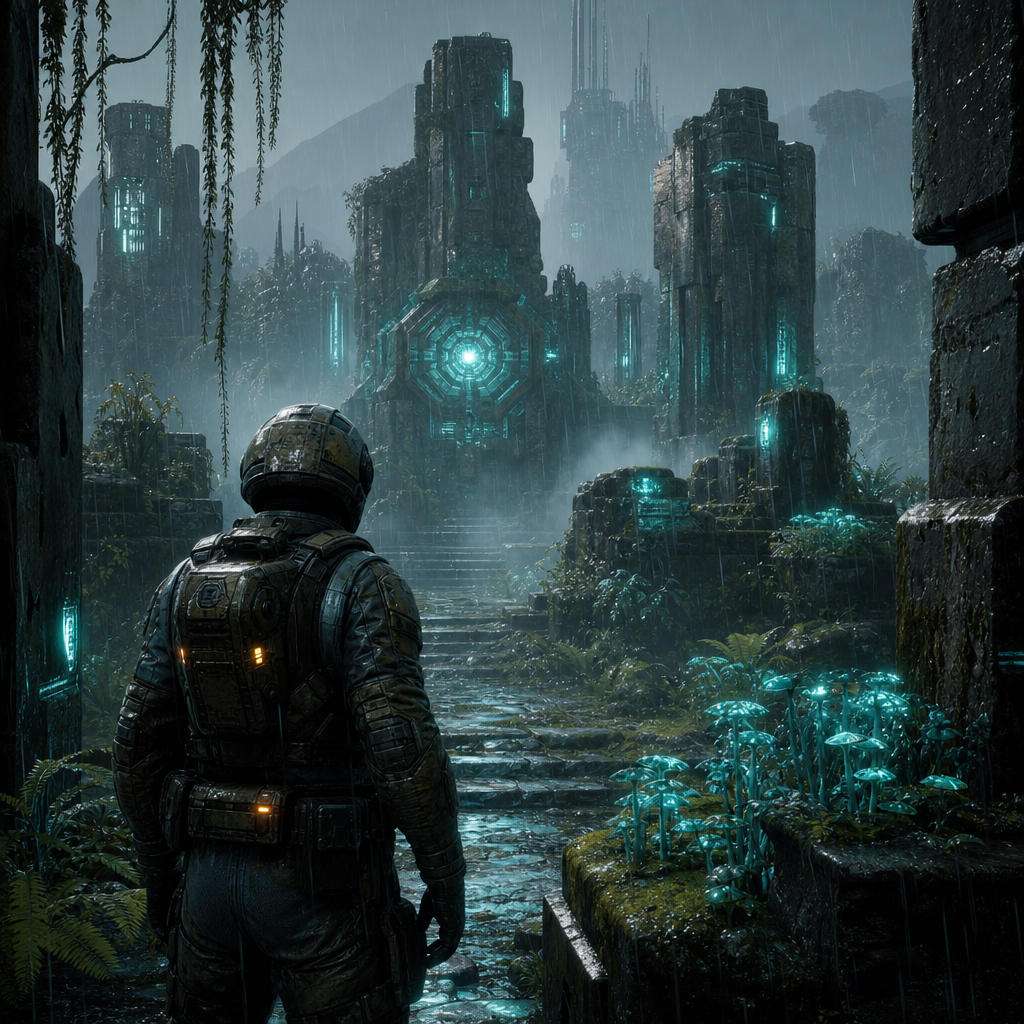
Tallon IV remains the headline. The rain-slick ruins, frozen labs, toxic caverns, and ancient machinery still feel like parts of one coherent place rather than disconnected video-game biomes. Retro Studios understood that atmosphere is not just about graphics; it is about texture, sound, and restraint. The environmental audio still does a huge amount of lifting, and the visor effects give the whole adventure a physical presence many first-person games still struggle to match.
Then there is the scan visor, which could have been a gimmick and instead becomes one of the game’s smartest ideas. It turns curiosity into mechanics. If you want the traffic angle in one sentence, here it is: people still search for the best exploration-heavy GameCube game, and Metroid Prime keeps being the answer because it rewards paying attention. Lore, creature behaviour, machinery, and small environmental details all make the world feel denser without drowning the player in cut-scenes.
The progression loop is just as strong. Missiles, morph ball upgrades, beams, suit upgrades and traversal tools all feel like genuine keys rather than stat bumps. Backtracking usually lands because the world folds back on itself intelligently, and because the next power-up changes how you think about spaces you already passed through. It has that same elegant readability that makes A Link to the Past still feel so clean decades later: the game trusts you to notice patterns and remember unfinished business.
Where the Age Shows
It is not flawless. Combat is functional rather than thrilling for long stretches, especially if you come in expecting a modern first-person shooter. Lock-on works well and keeps the focus on movement, observation, and positioning, but routine fights can feel more like maintenance than drama. A few boss battles also lean harder on endurance and pattern repetition than they do on surprise.
The late-game artifact hunt is the other obvious friction point. It is not disastrous, but it is one of those old-school pacing decisions that feels more respectable than exhilarating. Metroid Prime is usually brilliant at making backtracking feel purposeful; the artifact stretch is where that confidence wobbles and starts to feel a bit like homework.
Why It Still Matters in 2026
Metroid Prime still matters because it solved a conversion problem that should have gone wrong. It took the DNA of a 2D classic and rebuilt it in 3D without losing the series’ mood or structure. That remains impressive in 2026 because plenty of modern games with bigger budgets and louder scripts still fail to create this kind of solitude, coherence, and player-driven discovery.
It also remains one of the best entry points for anyone curious about Nintendo’s older catalogue beyond mascot comfort food. If you want a GameCube classic that still feels immersive, intelligent, and properly transportive, this is one of the easiest recommendations on the shelf. It is not just a piece of Nintendo history. It is still a world worth getting lost in.
Verdict
Metroid Prime is still an essential retro Nintendo game in 2026: atmospheric without being empty, clever without becoming smug, and built around a progression loop that still makes exploration feel rewarding instead of procedural. Some combat flatness and the late artifact sweep show their age, but not nearly enough to damage the larger achievement.
10 / 10. If you want the GameCube game that best proves older 3D design can still feel elegant, moody, and genuinely absorbing, Metroid Prime remains the standard.
- Play tip: Scan more than the game strictly requires. Metroid Prime is richer when you treat Tallon IV like a place instead of a checklist.
- Play tip: When you get a new traversal tool, think about blocked routes you ignored earlier. The game rewards mental note-taking.
- Authority link: Wikipedia overview of Metroid Prime
- Authority link: Nintendo’s Metroid Prime Remastered page
Where does Metroid Prime land for you now: still the GameCube’s exploration king, or has another Nintendo classic aged better in your eyes?
Leave a Reply