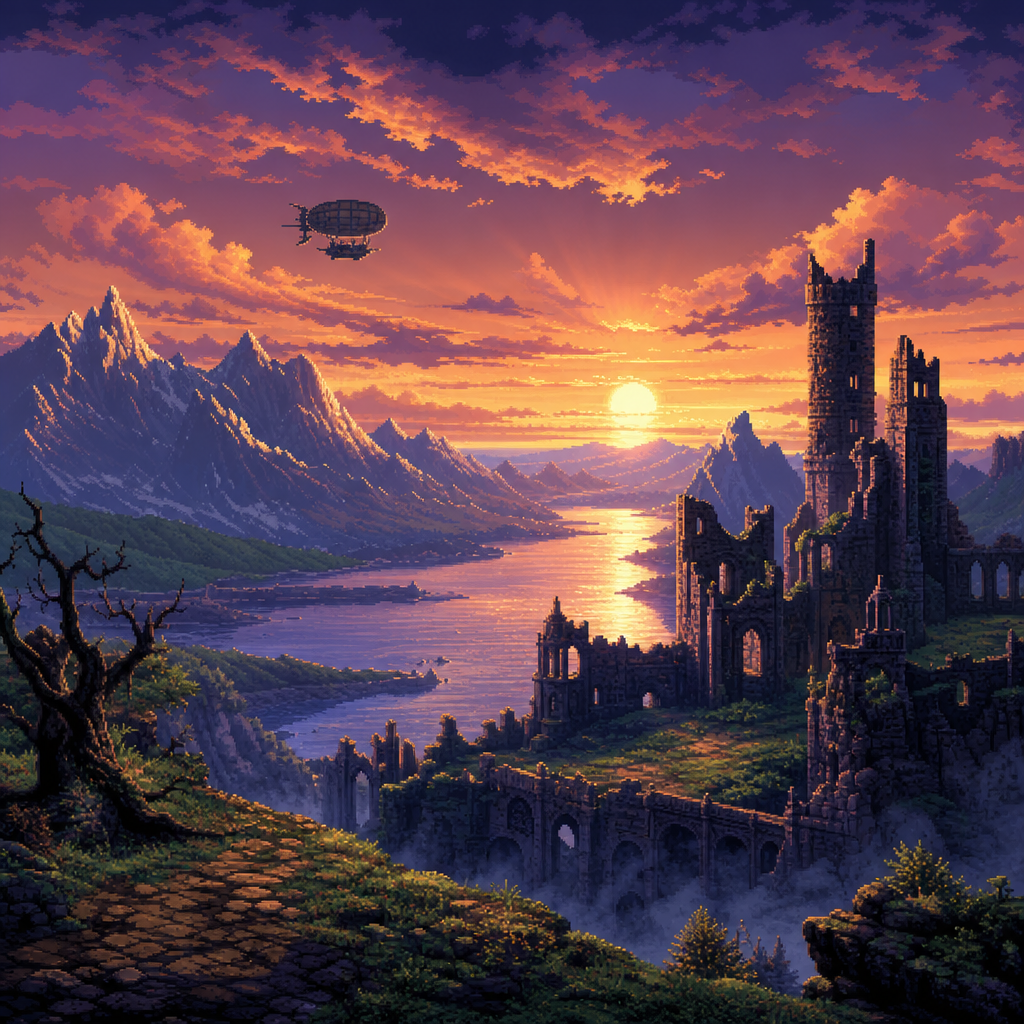
Title Final Fantasy VI
Developer Square
Publisher Square
Year 1994
Platform focus SNES original release
Genre JRPG
Score 10 / 10
Final Fantasy VI still sits near the top of one extremely evergreen retro search in 2026: what is the best SNES RPG to actually play, not just politely respect from a distance? I think Square’s 1994 heavyweight still has a serious claim. Plenty of beloved old role-playing games survive because they were important. Final Fantasy VI survives because it is still emotionally sharp, mechanically readable, and far less bloated than its legend can make it sound.
It also helps that the game meets modern players halfway faster than you might expect. The opening throws you into conflict immediately, the world feels specific without drowning you in lore dumps, and the cast arrives with clean, memorable hooks. In the same way Chrono Trigger still feels startlingly brisk for a revered SNES giant, Final Fantasy VI understands pacing better than plenty of newer RPGs that learned from it.
Why Final Fantasy VI Still Works
The obvious headline is the ensemble cast. Terra, Locke, Celes, Edgar, Sabin, Cyan, Shadow and the rest are not all equally deep, but the game gives them distinct silhouettes, rhythms, and emotional jobs. That matters because Final Fantasy VI is at its best when it feels like a road movie with too many broken people in the same carriage. Even now, the cast sells the sense that the world is bigger than one chosen hero and one neat destiny.
Then there is the structure. The first half moves with remarkable confidence, hopping between towns, set-pieces, and personal detours without losing the thread. The second-half shift still lands because it is not just a plot twist; it changes the mood of the whole adventure. The world suddenly feels lonelier, stranger, and more player-driven. If A Link to the Past shows how elegant SNES adventure design could be, Final Fantasy VI is the more operatic side of the same era: bigger feelings, bigger spectacle, and just enough freedom to make exploration feel personal.
The battle system has aged better than some turn-based peers too. The Active Time Battle flow keeps fights lively, Espers give character growth enough flexibility to invite experimentation, and the game is smart about delivering memorable abilities before the system gets stale. Nobuo Uematsu’s soundtrack does a huge amount of lifting here as well. It is not nostalgia talking: the music still carries scenes with a confidence many fully orchestrated modern RPGs would envy.
Where the Age Shows
It is not frictionless. Random encounters can still feel over-frequent in stretches where you are trying to navigate rather than grind, and the interface carries a few of those old JRPG habits that assume you will happily dig through menus forever. The localisation is also a reminder that 1990s script constraints were real. The personality survives, but some scenes hit harder in concept than in exact line-by-line delivery.
Character balance is another small wrinkle. The huge roster is exciting, yet it does mean some party members feel essential while others feel more like luxury picks. Final Fantasy VI usually gets away with that because the world and pacing stay so strong, but it is one of the few places where the game’s scale occasionally works against its precision.
Why It Still Matters in 2026
Final Fantasy VI still matters because it captures something a lot of prestige RPGs lose: scale without sludge. It feels grand, but rarely padded. Emotional, but not self-important. Mechanical, but not exhausting. If you are searching for the best entry point to classic Final Fantasy, one of the best 16-bit RPGs ever made, or simply an old game that still earns its reputation when the nostalgia fog clears, this remains one of the easiest recommendations on the shelf.
It also stands as a reminder that 16-bit storytelling did not need voice acting or enormous cinematics to feel theatrical. A few sprites, a gorgeous soundtrack, and some ruthlessly well-judged scene direction were enough. That craft still looks impressive in 2026.
Verdict
Final Fantasy VI is still an essential retro RPG in 2026: rich without being baggy, emotional without becoming embarrassing, and packed with moments that explain exactly why the SNES era still inspires so many modern developers. A little menu friction and some random-encounter fatigue stop it being completely painless, but not nearly enough to blunt the magic.
10 / 10. If you want the SNES RPG that most convincingly balances big spectacle, strong pacing, and genuine heart, Final Fantasy VI is still one of the first cartridges I would point you toward.
- Play tip: Rotate party members more than your instincts tell you to. Final Fantasy VI is better when you let the full cast breathe.
- Play tip: Do not rush the World of Ruin. Some of the game’s best texture comes from taking the scenic route after the big turn.
- Authority link: Wikipedia overview of Final Fantasy VI
- Authority link: Square Enix’s Final Fantasy VI Pixel Remaster page
Where does Final Fantasy VI land for you now: still Square’s finest 16-bit RPG, or has another classic stolen that crown?
Leave a Reply