Title WipEout 2097
Developer Psygnosis
Publisher Psygnosis
Year 1996
Platform focus PlayStation original release (also known as Wipeout XL in North America)
Genre Futuristic racing
Score 9 / 10
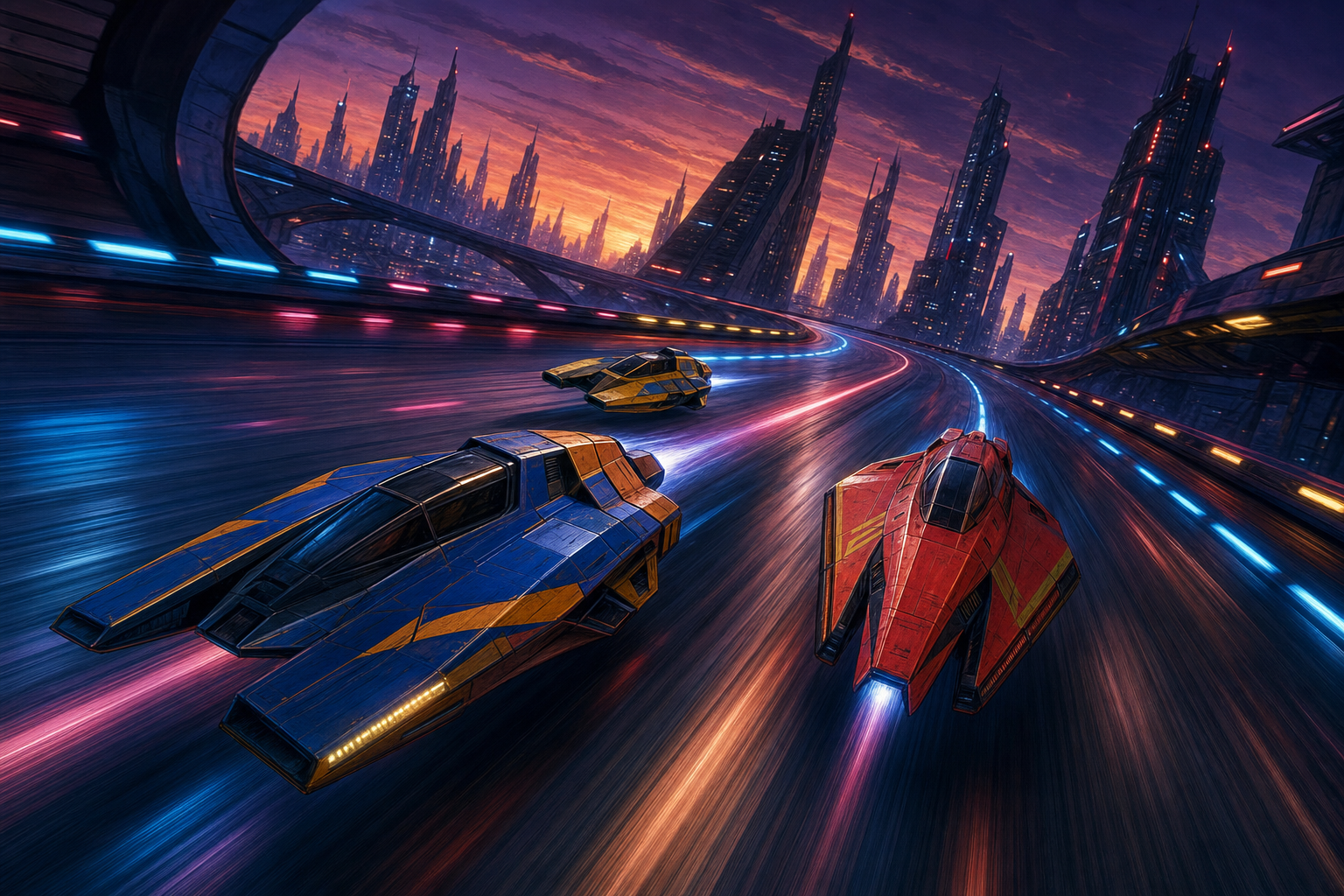
WipEout 2097 still answers a very practical retro question in 2026: if you want a PlayStation racer that feels stylish, fast, and unmistakably cool rather than merely historically important, is Psygnosis’ anti-gravity classic still worth your time? I think absolutely. Plenty of 1990s racers now survive more on affection than on handling, but WipEout 2097 still has that lovely sensation of speed with purpose. It is not just hurtling forward noisily. It feels precise, hostile, and oddly elegant.
What I still like most is the confidence of the whole package. Where Sega Rally Championship wins you over with drift-heavy immediacy, WipEout 2097 goes for something icier and more futuristic. You skim inches above the ground, fight the corners, manage weapon pressure, and gradually realise the game is asking for rhythm as much as reflexes. That is why it remains such a strong answer for anyone searching for the best PS1 racing games or wondering whether Wipeout XL still holds up today.
Why WipEout 2097 Still Works
The first strength is handling. The craft feel weighty enough to punish sloppy lines, but they never feel sluggish. Once you learn how each course wants to be read, the game turns into a wonderful dance of braking, side-shifting, and committing to impossible-looking bends. It gives speed a texture that many arcade racers never quite achieve. The best laps feel earned.
The track design helps enormously. Courses are busy without becoming unreadable, and they sell the fantasy of a hostile future sports league better than a lot of bigger-budget sci-fi games manage. There is real craft in the way visual clutter, elevation changes, and tunnel lighting build tension without making the action impossible to parse. Even now, it looks like a game that understands presentation as part of play, not as wallpaper.
I also think the soundtrack and mood deserve their reputation. This is one of those rare racing games where the audio identity is not an accessory; it is part of the machine. The music, menus, and sleek UI all push in the same direction, giving WipEout 2097 a club-culture cool that still feels distinct. In 2026 that matters, because so many retro favourites are easy to respect but harder to actively inhabit. WipEout 2097 still feels like a place.
Where the Age Shows
The biggest barrier is that it can be unforgiving, especially early on. If you come in expecting the broad, instantly readable chaos of F-Zero X or the party-racer generosity of Mario Kart 64, the learning curve can feel a little frosty. Walls bite hard, weapon hits can ruin a promising run, and the game does not bend over backwards to flatter the player.
There is also some period roughness in the visuals. The draw distance is not magical, some of the environmental detail can smear together on original hardware, and newcomers may need a few races before the track language fully clicks. But I do not see that as fatal ageing. If anything, the slight harshness is part of the appeal. This is a racing game that wants concentration. It trusts the player to rise toward it rather than constantly smoothing every edge.
Why It Still Matters in 2026
WipEout 2097 still matters because it captures a very specific version of 1990s PlayStation confidence: music-forward, design-led, and convinced that games could look fashionable without becoming shallow. If you are searching for the best futuristic racing games, the most stylish PS1 racers, or a retro game that still makes speed feel dangerous, this remains close to essential.
It also stands out because the coolness is backed by substance. Strip away the iconography and you still have a superb racer underneath, one that rewards study and keeps getting better as your lines improve. That is a big reason it has aged more gracefully than many games built around attitude alone.
Verdict
WipEout 2097 is still one of the smartest racing games to revisit in 2026: fast, stylish, demanding, and far more tactile than plenty of modern imitators. It asks for patience in the opening hours and it definitely punishes laziness, but the payoff is a racing rhythm that still feels special.
9 / 10. If you want a retro PlayStation racer with real personality and a handling model that improves the more seriously you take it, WipEout 2097 remains an easy recommendation.
- Play tip: Brake earlier than you think on unfamiliar tracks; this game rewards clean exits far more than desperate entries.
- Play tip: Learn which corners can be side-shifted safely, because tiny positioning gains add up quickly over a full lap.
- Authority link: MobyGames entry for WipEout 2097 / Wipeout XL
- Authority link: Wikipedia overview of WipEout 2097
Does WipEout 2097 still top your list of PS1 racers, or would you put a different 32-bit speed fix ahead of it in 2026?