Title Silent Hill
Developer Team Silent
Publisher Konami
Year 1999
Platform focus PlayStation original release
Genre Survival horror
Score 9 / 10
Silent Hill still answers a very useful autumn-shaped retro question in 2026: if you want a PlayStation horror game that feels disturbing, lonely, and genuinely oppressive rather than merely famous, is Konami’s 1999 original still worth playing now? I think absolutely. Not because it is smoother than modern horror games, and definitely not because it is more welcoming. It works because it still understands something too many later horror games forget: fear lands harder when a place feels sick before anything even attacks you.
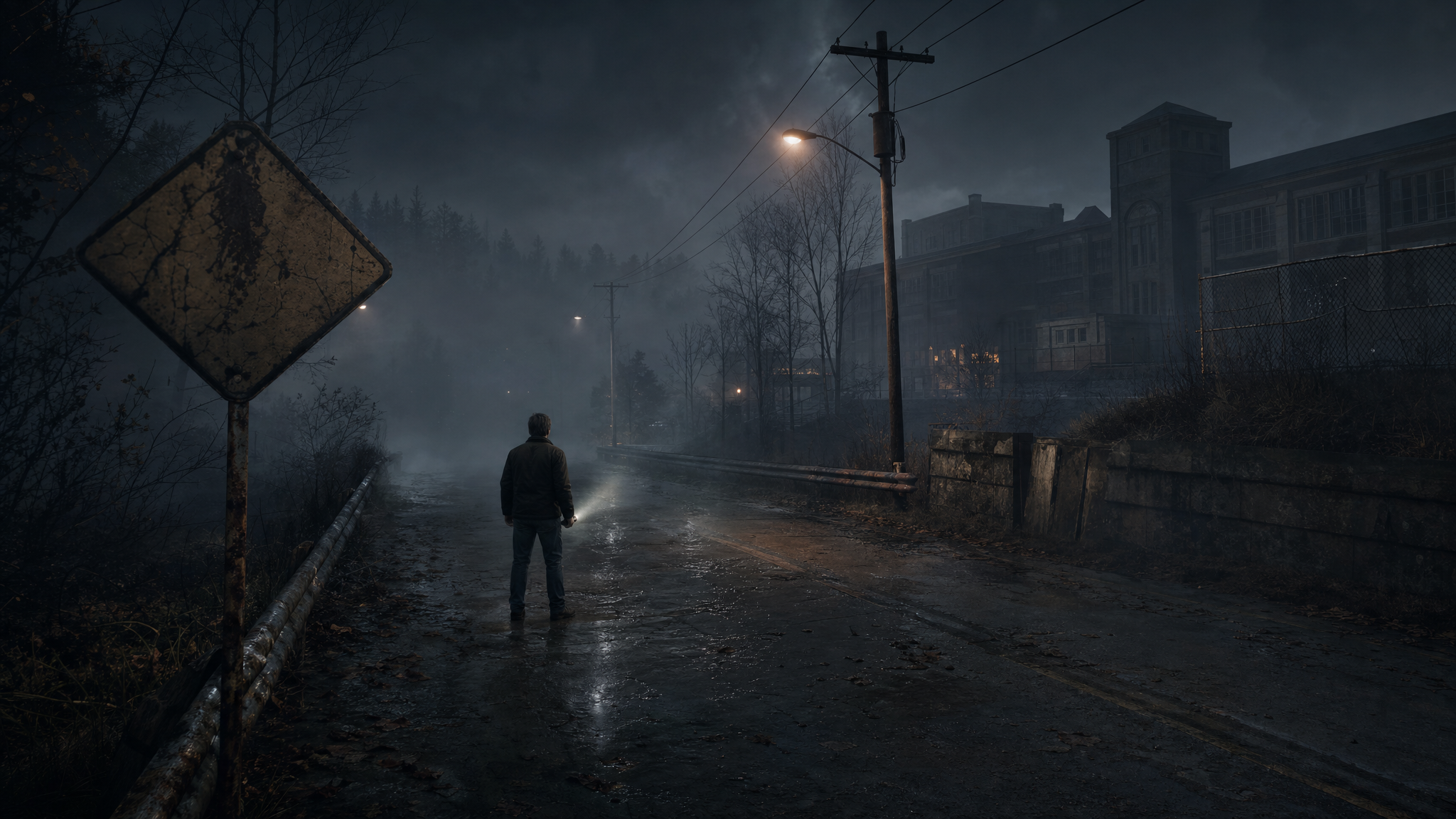
Harry Mason’s search for his missing daughter takes him through fog-choked streets, abandoned schools, rusted corridors, and the sort of nightmare spaces that feel half dream and half municipal collapse. Where Resident Evil 2 thrives on tidy route-planning and pressure-cooker resource management, Silent Hill goes after disorientation instead. It wants you unsure of the map, unsure of the sound design, and sometimes unsure of what the town is even trying to say. That mood-first design still feels potent in 2026, a bit like the way Vagrant Story turns the original PlayStation into an atmosphere machine.
Why Silent Hill Still Feels Different
The obvious strength is atmosphere, but that undersells how cleverly the game builds it. The famous fog was partly technical camouflage, sure, yet it became a design weapon. You are never given a clean, comfortable view of danger. Streets dissolve a few steps ahead. Radio static warns you that something is close, but not always where or how close. Flashlight beams carve little islands of safety out of an environment that never feels safe enough.
I also still like how nasty the town feels without relying on speed or spectacle. Enemy encounters are awkward in a deliberate way. The camera can unsettle you without fully sabotaging you. The soundtrack and industrial noise design do enormous amounts of work, turning empty hallways into threats before any creature actually enters the frame. Even now, few horror games sound this unwell.
There is also a real confidence to the storytelling. Silent Hill does not explain itself into the ground. It leaves room for symbols, contradictions, and player interpretation. That restraint is a big reason people still search for the best classic Silent Hill game or wonder whether the PS1 original holds up beyond nostalgia. It does, because it still feels authored rather than assembled.
Where the Age Shows
This is still a 1999 survival horror game, and it behaves like one. Combat is clumsy, some boss fights are more stressful than elegant, and the voice acting can wobble between intentionally alien and accidentally stiff. If you need crisp melee feedback or modern checkpoint generosity, the original game can feel abrasive very quickly.
The pacing also asks for patience. Some exploration stretches are all mood and friction, with only sparse payoff in the moment. I think that works more often than it fails, but it does mean Silent Hill is easier to admire if you meet it on its own terms rather than demanding a modern horror rhythm from it.
Why It Is Still Worth Playing in 2026
What keeps Silent Hill alive is that its identity has not been sanded smooth by time. Plenty of old horror games are historically important but easier to respect than to actually enjoy. This one still gets under the skin. The town remains memorable, the soundscape remains vicious, and the psychological bent still gives it a personality that separates it from the zombie-lab tradition around it.
It is also a strong collector and revisit pick because the original PlayStation presentation remains part of the effect, not an obstacle to be politely ignored. The grain, the fog, the darkness, the slightly awkward human performances — all of it combines into something uncanny enough that a cleaner remake would risk losing the grime that makes the game work.
Verdict
Silent Hill is still one of the most effective PlayStation horror games to revisit in 2026: oppressive, strange, and far more psychologically clingy than many bigger-budget descendants. It is awkward in places and never especially friendly, but that discomfort is part of the spell.
9 / 10. If you want an original PS1 survival horror game that still feels genuinely haunted rather than simply old, this remains an essential trip into the fog.
If you replay the original Silent Hill today, which part still gets to you first: the fog, the radio, or the school?
Further reading: Konami’s Silent Hill series hub and Wikipedia’s release and development overview for the 1999 original.
Leave a Reply