Tag: Treasure

  • Guardian Heroes Review — Is Treasure’s 1996 Sega Saturn Cult Classic Still Worth Playing in 2026?

    Guardian Heroes Review — Is Treasure’s 1996 Sega Saturn Cult Classic Still Worth Playing in 2026?

    Title Guardian Heroes
    Developer Treasure
    Publisher Sega
    Year 1996
    Platform focus Sega Saturn original release
    Genre Beat ’em up / action RPG
    Score 9 / 10

    Guardian Heroes still answers a very specific retro question beautifully in 2026: if you want one Sega Saturn game that instantly explains why collectors, import hunters, and Treasure fans get a bit feverish about the system, is this the one? I think it probably is. Treasure’s 1996 brawler is messy in a few old-school ways, but it is also loud, inventive, charming, and mechanically weird enough to feel exciting rather than merely preserved.

    At a glance, it looks like a fantasy beat ’em up with anime energy and a lot of shouting. That is true, but it undersells what makes it special. Guardian Heroes mixes lane-based brawling, light RPG levelling, branching story paths, and pure arcade chaos into something that still feels unusually generous. Where Streets of Rage 2 wins through bruising clarity and near-perfect restraint, Guardian Heroes wins by throwing ideas everywhere and somehow keeping the whole thing upright. And like Gunstar Heroes at Treasure’s most gloriously excessive, it understands that velocity and surprise can cover a lot of ground when the fundamentals are sharp.

    Why Guardian Heroes Still Feels So Distinctive

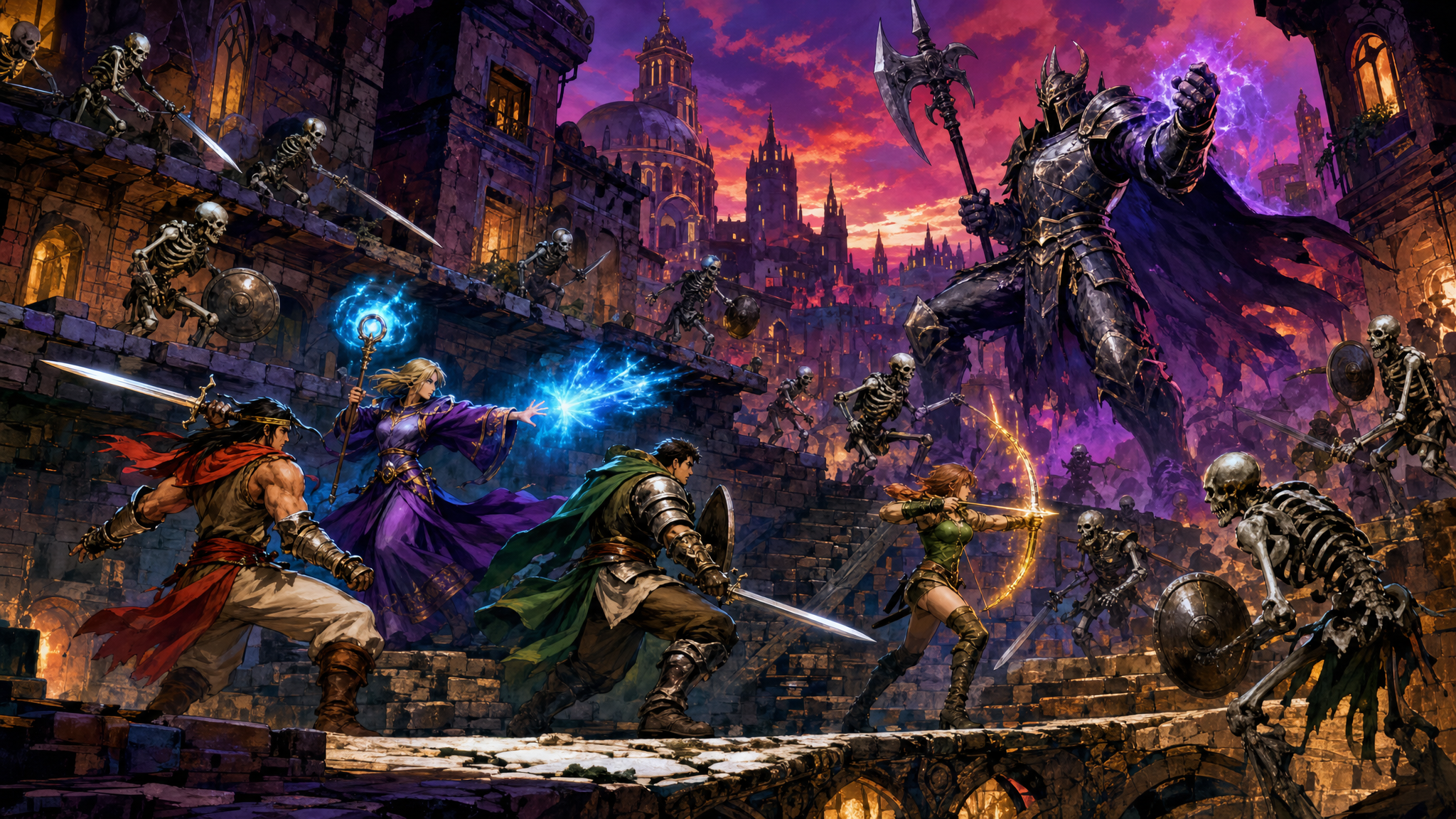
    The first thing that still lands is how energetic it feels. Characters dash, juggle, launch, cast, and crash around the screen with a sense of cartoon violence that the Saturn handles beautifully. The three-plane battlefield gimmick could have been a clumsy novelty, but it gives fights a pleasing layer of positioning. You are not just mashing through crowds; you are choosing lanes, breaking enemy groups apart, and deciding when to bully single targets or control space.

    I also still love the structure. The campaign is short by RPG standards, but it is packed with route splits, stat growth, character choices, and tonal swerves. One minute you are in a scrappy town escape; the next you are knee-deep in undead nonsense, political melodrama, or full-screen magical carnage. That branching design gives the game replay value that feels practical rather than theoretical. If someone searches for “best Sega Saturn game still worth playing” or “retro beat ’em up with replay value,” this is exactly the kind of answer that deserves to rank.

    The cast helps too. Even if the writing is broad and theatrical, each fighter has enough personality in movement and attack feel to make experimentation worthwhile. Han is dependable, Randy has brute-force appeal, Nicole brings the magic spectacle, and the wider unlockable roster pushes the game even further into cult-classic territory. It feels like a beat ’em up made by people who were slightly bored by ordinary beat ’em ups.

    Where the Age Shows

    It is not hard to spot the 1996 edges. The screen can become noisy, enemy behaviour can tilt from manageable to chaotic in seconds, and some players will bounce off the plane-switching until it clicks. Co-op also turns the game into a wonderful mess rather than a model of clean readability. I mean that affectionately, but it is still a real caveat.

    The story, meanwhile, is fun in a loud anime-fantasy way rather than an elegant one. If you need subtle writing or careful pacing, Guardian Heroes is not here to help. Levelling systems are light rather than deeply strategic too, so do not come in expecting a fully formed action-RPG sandbox. This is more of a brawler with extra flavour than a deep character-build obsession.

    Why It Is Still Worth Playing in 2026

    What keeps Guardian Heroes relevant is that almost nobody makes this exact blend anymore. Modern games borrow bits of it — branching runs, crowd combat, expressive juggling, stat growth — but very few of them combine all those pieces with this much personality. It still feels like a singular object from the Saturn era: ambitious, slightly unruly, and completely comfortable being a cult favourite instead of a mass-market compromise.

    It also holds up because Treasure knew how to make action feel playful. Even when the game gets cluttered, there is a confidence to the animation, hit reactions, and magical chaos that keeps it from feeling dusty. For Saturn nostalgia, collector curiosity, or anyone trying to find the system’s most convincing evergreen recommendation, Guardian Heroes still has real bite.

    Verdict

    Guardian Heroes remains one of the Sega Saturn’s strongest arguments in 2026: imaginative, scrappy, generous, and just unruly enough to stay memorable. A little visual chaos and some mid-90s roughness stop it short of total perfection, but the invention level is still hard to resist.

    9 / 10. If you want a retro brawler that still feels eccentric, replayable, and unmistakably alive, Guardian Heroes is an easy recommendation.

    • Play tip: Try a second run with a different character path instead of treating the first ending as the whole game; the branching structure is part of the appeal.
    • Play tip: Use lane-switching defensively when crowds start to snowball rather than standing still and eating chaos.
    • Authority link: Wikipedia overview of Guardian Heroes
    • Authority link: MobyGames entry for Guardian Heroes

    When you go back to Guardian Heroes now, what grabs you more: the Treasure chaos, the branching replay value, or simply the fact that the Saturn got something this strange and this good?
  • Gunstar Heroes Review — Is Treasure’s 1993 Mega Drive Run-and-Gun Masterpiece Still Worth Playing in 2026?

    Gunstar Heroes Review — Is Treasure’s 1993 Mega Drive Run-and-Gun Masterpiece Still Worth Playing in 2026?

    Title Gunstar Heroes
    Developer Treasure
    Publisher Sega
    Year 1993
    Platform focus Mega Drive / Genesis original release
    Genre Run-and-gun / action platformer
    Score 9 / 10

    Gunstar Heroes still feels like one of the best answers to a simple retro question in 2026: what 16-bit action game delivers pure joy the moment you press start? Treasure’s 1993 Mega Drive showpiece is loud, messy, inventive, and almost absurdly energetic, but that chaos is exactly why it still works. This is not a museum piece you politely admire for historical reasons. It is a real, living recommendation for anyone searching for the best Mega Drive run-and-gun, or just a retro game that still knows how to hit the gas.

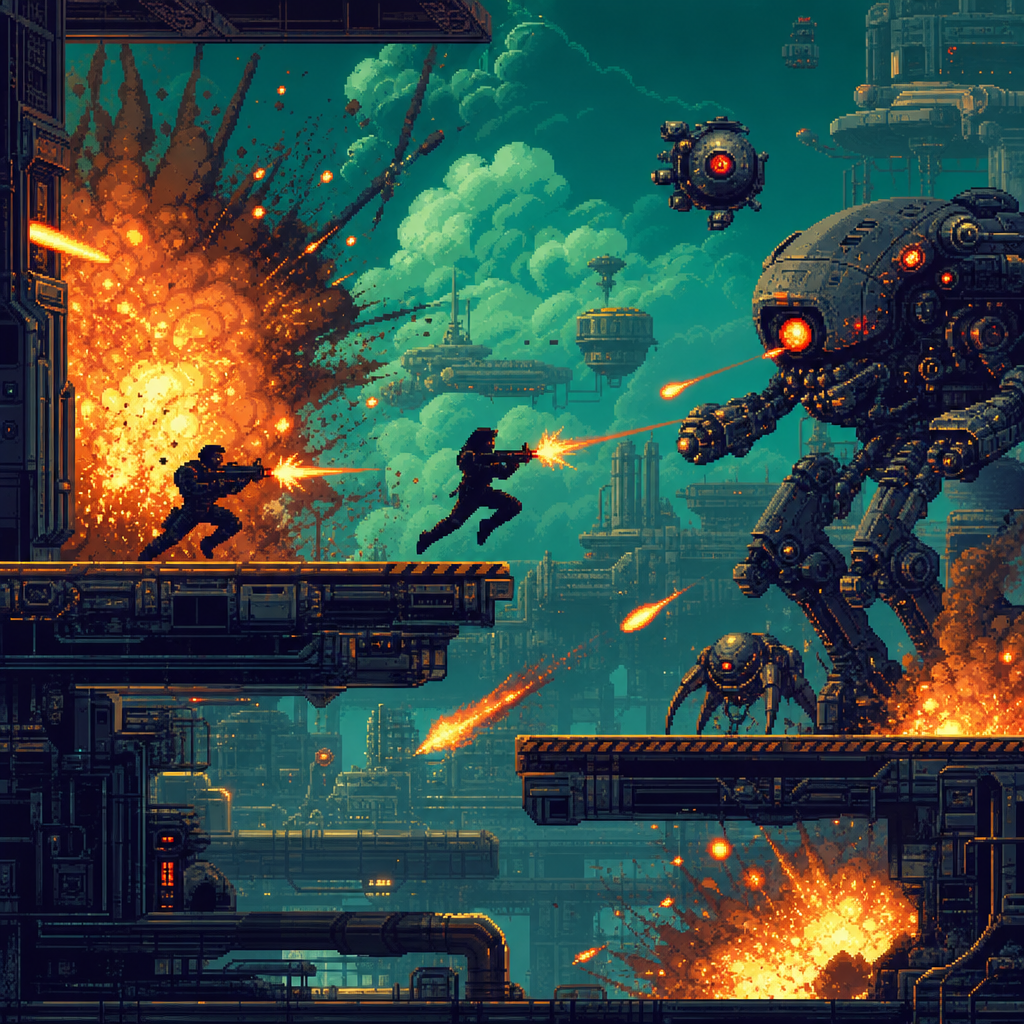
    What grabs me first is how aggressively creative it is. Plenty of old action games give you enemies, jumps, and bullets. Gunstar Heroes gives you mine carts, collapsing dice palaces, multi-phase robot duels, screen-filling bosses, and weapon combinations that feel like a toy box designed by caffeine addicts. Like Shinobi III at full sprint, it understands how much momentum matters. Like Streets of Rage 2 at Sega’s most swaggering, it still sells impact better than plenty of newer throwback games.

    Why Gunstar Heroes Still Rules

    The big reason Gunstar Heroes holds up is that it never settles into autopilot. Even when you understand the basic move set, the game keeps twisting the rules just enough to stay surprising. The famous weapon-combine system helps: fire, laser, chaser, and force are all useful on their own, but mixing them turns the game into a small strategy experiment. You can play safe, play loud, or play like a complete menace. That flexibility gives repeat runs genuine flavour.

    The boss design is also still sensational. Treasure’s best work always feels half action game, half fireworks display, and Gunstar Heroes might be the purest version of that. Fights are theatrical without becoming unreadable. Huge mechanical monsters, weird screen tricks, and sudden tempo changes make each battle feel memorable instead of interchangeable. If someone lands on Happy Fragger looking for “is Gunstar Heroes still worth playing?” the easy answer is yes, partly because so many of its set-pieces still feel fresher than modern retro pastiche.

    I also love the co-op energy baked into it. Even solo, the game has that arcade-adjacent sense of shared chaos, as if it expects you to shout at the screen when the room fills with projectiles. In two-player mode it becomes even better: not elegant exactly, but gloriously alive. That rough-edged excitement is part of the appeal. Gunstar Heroes is not trying to be cool and composed. It wants to overwhelm you, then make you laugh about surviving it.

    Where the Age Shows

    For all its brilliance, the game is not frictionless. Some visual clutter can make first-time runs feel more confusing than fair, especially during the busiest boss encounters. The physics also have a slightly floaty looseness compared with the razor-clean precision of some other 16-bit action classics. Once you adjust, it mostly clicks, but there is a learning curve if you are coming from modern games with stricter readability and more generous checkpointing.

    The pacing can be a touch exhausting too. That sounds like praise, and mostly it is, but Gunstar Heroes is so eager to top itself that it occasionally sacrifices breathing room. Not every player wants nonstop escalation. Some will prefer the more measured rhythm of games built around cleaner pattern recognition and less sensory overload.

    Why It Still Matters in 2026

    What makes Gunstar Heroes special now is that it still feels brave. It comes from a period when big 16-bit action games were competing on spectacle, but Treasure pushed beyond spectacle into personality. The animation is exaggerated, the bosses are borderline ridiculous, and the whole game radiates confidence. That kind of design ages well because it is not chasing realism or fashion. It is chasing delight.

    It also remains an important recommendation because it shows how much variety the Mega Drive could deliver at its peak. When people reduce the system to a handful of usual suspects, Gunstar Heroes is a reminder that some of its finest games were the ones willing to be a little unruly. In 2026, with retro players constantly asking which 16-bit games genuinely deserve their time, this is still near the front of the queue.

    Verdict

    Gunstar Heroes remains one of the most exhilarating action games on the Mega Drive: inventive, explosive, and still packed with ideas that feel bolder than they should for 1993. A bit of clutter and some old-school chaos stop it short of absolute perfection, but the highs are outrageous.

    9 / 10. If you want a retro run-and-gun that still feels thrilling, playful, and gloriously over-the-top in 2026, Gunstar Heroes is an easy recommendation.

    • Play tip: Try the homing chaser mix on a first run. It sacrifices some raw punch, but it makes the game’s busiest fights far easier to read.
    • Play tip: Use the fixed-shot stance when bosses crowd the screen. It turns frantic movement into something much more controlled.
    • Authority link: Wikipedia overview for Gunstar Heroes
    • Authority link: MobyGames entry for Gunstar Heroes

    Where does Gunstar Heroes land for you: all-time Mega Drive top tier, or just a brilliant chaos machine you admire more than love?