Tag: Nintendo 64

  • Star Fox 64 Review — Is Nintendo’s 1997 N64 Rail Shooter Still Worth Playing in 2026?

    Star Fox 64 Review — Is Nintendo’s 1997 N64 Rail Shooter Still Worth Playing in 2026?

    Title Star Fox 64
    Developer Nintendo EAD
    Publisher Nintendo
    Year 1997
    Platform focus Nintendo 64 original release
    Genre Rail shooter
    Score 9 / 10

    Star Fox 64 still answers a very useful retro question in 2026: if you want a Nintendo 64 game that feels instantly exciting, endlessly replayable, and far slicker than its age should allow, is Nintendo’s 1997 rail shooter still worth playing today? I think yes. It is short enough to finish in an evening, but smart enough to keep pulling you back for better routes, higher hit counts, and cleaner dogfights. Star Fox 64 is remembered because it still plays beautifully.

    What keeps it alive is focus. Where Wave Race 64 still feels magical because one big mechanical idea carries the whole game, and F-Zero X still wins by making speed itself the spectacle, Star Fox 64 survives on rhythm. It moves fast, it teaches by throwing interesting situations at you, and it understands that a compact action game can feel rich if every five minutes bring a new wrinkle. That design confidence is why the game still feels crisp rather than quaint.

    Why Star Fox 64 Still Feels So Good

    The biggest reason is pacing. Star Fox 64 almost never idles. One moment you are clipping enemy formations over Corneria, the next you are dodging searchlights, weaving through asteroid fields, or squaring up to a boss that looks theatrical in classic late-1990s Nintendo fashion. The campaign is built from memorable bursts rather than long stretches of filler, and that makes it unusually friendly to modern attention spans.

    The controls have aged better than many polygonal shooters from the same period. The Arwing feels light without becoming loose, and the game always gives you enough precision to feel responsible for a good run. Barrel rolls, boost timing, bomb use, and route-specific objectives all add texture without making the game feel busy. The result is an action game that still feels approachable for a newcomer but rewarding for anyone chasing medals, alternate paths, or cleaner all-range fights.

    I also still love how much personality Nintendo squeezed out of the format. The radio chatter remains wildly quotable, the wingmen give the whole campaign a sense of camaraderie, and the branching route structure quietly turns a short arcade shooter into something much more replayable. In that sense, it shares a bit of Mario Kart 64’s talent for converting simple systems into social stories you remember for years. Even when you are playing alone, Star Fox 64 feels like an event.

    Where the Age Shows

    The obvious weakness is visual complexity. The clean shapes and bold colours help the game remain readable, but some environments are undeniably sparse, and a few missions feel more impressive in memory than in raw geometry. If you need modern camera drama, dense scenery, or elaborate progression systems, this is very much a product of an earlier design philosophy.

    Its brevity can be a sticking point if you are not the replaying type. A straightforward run does not last long, and the multiplayer is more of a fun historical extra than a reason to keep a cartridge permanently plugged in. But I do not really see that as a major flaw. Star Fox 64 was built like an arcade game with a console brain: short, replayable, and happiest when you decide that the run you just finished was good enough to justify one more.

    Why It Still Matters in 2026

    Star Fox 64 still matters because it is one of the clearest examples of Nintendo understanding action-game economy. There is no bloat here, no fake scale, and no dead air. If you are searching for the best Star Fox game, one of the most replayable Nintendo 64 shooters, or a retro action game that still respects your time, this is still near the front of the conversation. It also remains a strong collector pick because the appeal is not just historical importance. The game still has tempo and that lovely sense that every level was tuned by people who hated waste.

    If you want the easiest modern route, Nintendo’s current platforms offer newer ways into the series, but the original Nintendo 64 release remains the cleanest statement of why Star Fox worked in the first place. It is the version that best balances spectacle, readability, challenge, and replay value.

    Verdict

    Star Fox 64 is still one of the sharpest Nintendo 64 action games to revisit in 2026: fast, quotable, inventive, and compact in a way that feels refreshing rather than slight. Its visuals are simple and its main campaign is brief, but the replay structure is so smart that the whole game still feels alive.

    9 / 10. If you want a retro shooter that still feels polished, energetic, and worth mastering instead of merely admiring, Star Fox 64 remains an easy recommendation.

    • Play tip: Treat wingman rescues as part of your route planning, because they often lead to the game’s best alternate paths.
    • Play tip: Do not hoard bombs forever; a well-timed clear on a crowded screen often matters more than saving them for a boss panic.
    • Authority link: Wikipedia overview of Star Fox 64
    • Authority link: Eurogamer game overview for Star Fox 64

    When you go back to Star Fox 64 now, does it still feel like Nintendo’s best arcade-style shooter, or is there another retro space blaster you would put ahead of it?

  • Wave Race 64 Review — Is Nintendo’s 1996 N64 Water Racer Still Worth Playing in 2026?

    Wave Race 64 Review — Is Nintendo’s 1996 N64 Water Racer Still Worth Playing in 2026?

    Title Wave Race 64
    Developer Nintendo EAD
    Publisher Nintendo
    Year 1996
    Platform focus Nintendo 64 original release
    Genre Water racer
    Score 9 / 10

    Wave Race 64 still answers a very handy retro question in 2026: if you want the best N64 racer beyond Mario Kart, does Nintendo’s jet-ski oddity still deserve a spot near the top of the pile? I think it absolutely does. Plenty of Nintendo 64 games are remembered for charm first and mechanical precision second. Wave Race 64 flips that order. It is charming enough, sure, but what still sells it is the feel: the water shifts under you, the buoy lines matter, and every course asks you to steer with just a little more care than you expected.

    That is why it has aged so well. Where Mario Kart 64 turns chaos into party-night magic and Sega Rally Championship turns handling into a dirt-spraying discipline, Wave Race 64 lives in a lovely middle space. It is approachable in a way many sim-minded racers are not, but it still rewards proper lines, rhythm, and nerve. You can play it casually. You can also get quietly obsessed with shaving seconds off your favourite lap.

    Why Wave Race 64 Still Feels So Good

    The headline feature is still the water physics. That sounds obvious, but it is the whole game’s personality. The waves are not just decoration; they change the way your machine lifts, lands, and turns. Even now, the courses feel alive because the surface never seems fully settled. Nintendo built a racer where the track moves under the player, and it still feels clever nearly three decades later.

    I also love how readable the design is. The buoy gates are a simple rule, but they make every race feel like a constant chain of micro-decisions. Hit them cleanly and you build speed. Miss them and the game punishes you without drama. It creates a nice tension between aggression and discipline. In that sense, it has a little of the same clean competitive logic that makes F-Zero X such a timeless N64 racer, even if the mood here is breezier and more summery.

    The presentation still helps too. The weather effects, the bounce of the water, and the bright coastal courses all give the game a distinct identity. Drake Lake still feels brisk and technical, Sunset Bay is still gorgeous in that late-90s Nintendo way, and the more violent water on Marine Fortress reminds you that Wave Race 64 is happiest when it is making you adapt on the fly.

    Where the Age Shows

    The rider voice clips and announcer chatter have a kind of period-specific cheese that will either charm you or wear thin fast. The roster is also small, and the broader package is lean by modern standards. If you need career sprawl, endless unlock trees, or dozens of events, this is not trying to compete on that level.

    It can also be a little harsher than its sunny presentation suggests. The water physics are the magic, but they are also the reason the game can feel slippery when you are learning. A mistimed landing or a clumsy angle into a gate can wreck a promising run very quickly. That friction is part of the design, though. The game becomes much better once you stop fighting the chop and start reading it.

    Why It Still Matters in 2026

    Wave Race 64 still matters because it shows how much personality a racing game can get from one great mechanical idea. It does not need licensed cars, giant circuits, or a hundred menu systems. It just needs excellent movement, memorable courses, and enough resistance to make improvement satisfying. If you are searching for the best water racing game ever made, one of the most impressive early Nintendo 64 showcases, or a retro racer that still feels genuinely different in 2026, it remains an easy recommendation.

    It is also a smart nostalgia-and-collector pick because it does not survive on reputation alone. Some N64 favourites are easier to admire than replay. Wave Race 64 is not one of them. Once you settle into its rhythm, it still feels fresh, and that is a rarer quality than people admit.

    Verdict

    Wave Race 64 is still one of the best Nintendo 64 racers to revisit in 2026: elegant, demanding, and powered by water physics that still feel a bit magical. It is lean, and it can be mildly prickly at first, but the handling is so distinctive that the whole game still feels special rather than merely historical.

    9 / 10. If you want an N64 racing game with real mechanical bite and a hook that still feels unique today, Wave Race 64 is absolutely worth riding again.

    • Play tip: Treat the waves like part of the course, not background noise; a calmer re-entry angle often matters more than raw throttle courage.
    • Play tip: Learn buoy rhythm before chasing shortcuts, because clean gates are where most of your real speed comes from.
    • Authority link: Wikipedia overview of Wave Race 64
    • Authority link: Eurogamer game overview for Wave Race 64

    When you go back to Wave Race 64 now, does it still feel like Nintendo’s most underrated racer, or do you rate another non-Mario Kart N64 speed game higher?

  • Mario Kart 64 Review — Is Nintendo’s 1996 N64 Party Racer Still Worth Playing in 2026?

    Mario Kart 64 Review — Is Nintendo’s 1996 N64 Party Racer Still Worth Playing in 2026?

    Title Mario Kart 64
    Developer Nintendo EAD
    Publisher Nintendo
    Year 1996
    Platform focus Nintendo 64 original release
    Genre Kart racing / party racer
    Score 8 / 10

    Mario Kart 64 still sits inside one of retro gaming’s most obvious 2026 searches: if you want an N64 game that can make a room noisy in under five minutes, is Nintendo’s 1996 kart racer still worth loading up? I think yes, with a small asterisk. This is not the most mechanically refined game in the series anymore, and some of its rougher edges are much easier to spot now, but the core appeal is still stubbornly alive. It is fast enough, mean enough, and readable enough to turn almost anyone into a competitor.

    That is the real trick. Where F-Zero X still feels like Nintendo’s harsher answer to speed freaks, Mario Kart 64 survives by understanding social chaos. It is not about perfect racing lines every second. It is about staying close enough to strike, knowing when to hold an item, and accepting that victory in this game is often part skill, part nerve, and part surviving somebody else’s badly timed shell.

    Why Mario Kart 64 Still Works

    The biggest reason is clarity. Mario Kart 64 is easy to read at a glance in a way many modern party racers somehow overcomplicate. The tracks are varied without becoming visually exhausting, the handling is approachable within minutes, and the items are simple enough that new players understand the stakes immediately. You do not need a tutorial, a progression system, or a season pass-brained list of unlock chores. You just pick a kart, pick a cup, and start making enemies.

    Multiplayer is still the heart of it. Four-player Mario Kart 64 has that wonderful late-90s living-room energy where every race can swing from calm to petty warfare in a single corner. Battle Mode helps too. It is thin compared with later entries, but the balloon-popping format still has the same rude, timeless pleasure that keeps games like Street Fighter II alive at gatherings: the rules are instantly legible, the grudges form fast, and everyone understands exactly why they are annoyed.

    There is also real charm in the presentation. The chunky tracks, bright colours, and big exaggerated animations still capture a specific N64 warmth. Mario Kart 64 is one of those games that looks better in memory than it does in still screenshots, because so much of its personality comes from motion, momentum, and the way the courses invite a bit of reckless swagger. When the drift clicks and you thread through traffic with an item in reserve, it still feels great.

    Where the Age Shows

    The obvious downside is that the driving is looser and less expressive than later Mario Kart games. Drifting is useful, but it lacks some of the snap and rhythm that make the series’ best entries feel endlessly replayable. A few tracks also feel wider and emptier than nostalgia tends to admit, especially if you are coming back from more modern racers with denser course design.

    Then there is the rubber-banding. Mario Kart has always flirted with chaos as a design principle, but Mario Kart 64 sometimes pushes that balance hard enough to make careful driving feel briefly negotiable. That unpredictability is part of the joke in multiplayer, yet in single-player it can occasionally make the 150cc climb feel more irritating than dramatic. This is a game that wants laughs and revenge almost as much as it wants clean competition.

    Why It Still Matters in 2026

    Mario Kart 64 still matters because it remains one of the clearest examples of Nintendo understanding that accessibility is not the same thing as softness. Almost anyone can play it. Not everyone can win consistently. That balance is why it still works for nostalgia sessions, family gatherings, and anyone searching for the best retro multiplayer games that require almost no setup beyond handing over spare controllers.

    It also holds up as a useful snapshot of the series before it became bigger, busier, and more feature-packed. If you want the Mario Kart that feels most like a bare-knuckle party game rather than a theme park of modes and crossovers, this is still a strong argument. It may not be the best Mario Kart overall in 2026, but it is absolutely one of the most socially dangerous.

    Verdict

    Mario Kart 64 is still worth playing in 2026, especially if your ideal retro session involves shouting at friends and pretending item luck was the only reason you lost. The handling has aged less gracefully than the best in the series, and the single-player fairness can wobble, but the local multiplayer magic remains immediate and very real.

    8 / 10. If you want a retro racer that still turns the sofa into a small war zone, Mario Kart 64 keeps earning its place.

    When you go back to Mario Kart 64 now, does it still feel like party-racing perfection, or have the later games spoiled you a bit?

  • F-Zero X Review — Is Nintendo’s 1998 N64 Arcade Racer Still Worth Playing in 2026?

    F-Zero X Review — Is Nintendo’s 1998 N64 Arcade Racer Still Worth Playing in 2026?

    Title F-Zero X
    Developer Nintendo EAD
    Publisher Nintendo
    Year 1998
    Platform focus Nintendo 64 original release
    Genre Futuristic racing
    Score 9 / 10

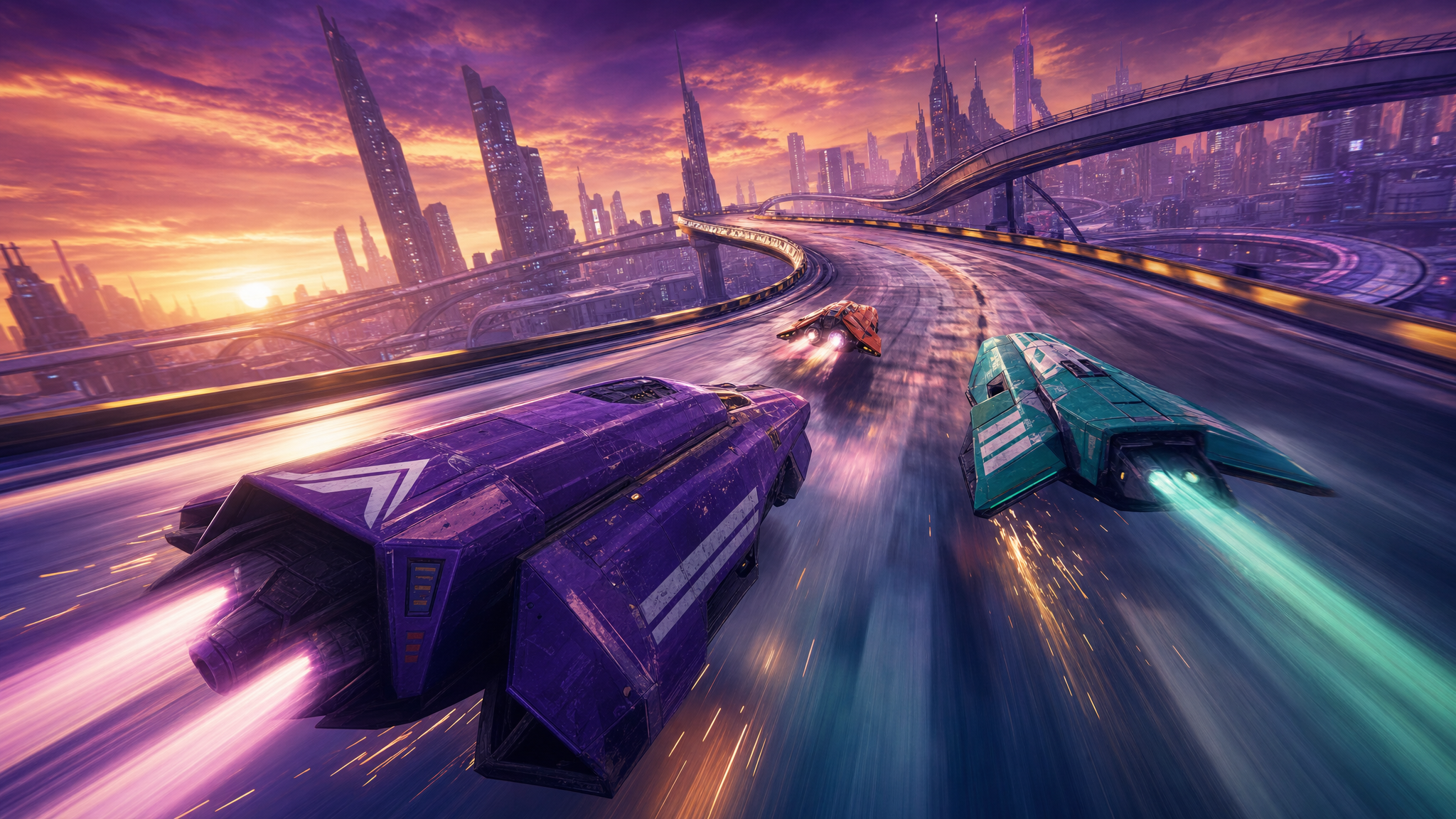
    F-Zero X still answers a very specific retro question in 2026: if you want a racing game that feels blisteringly fast, brutally clean, and refreshingly free of fluff, is this still one of the best to ever do it? I think yes. Nintendo’s 1998 N64 sequel remains one of the sharpest arcade racers of its era, and honestly one of the sharpest arcade racers of any era. It strips the genre down to speed, risk, and control, then trusts that those three things are enough.

    That confidence is why it still works. Where Crazy Taxi turns speed into cheerful chaos and Tony Hawk’s Pro Skater 2 turns mastery into flow, F-Zero X is harsher and more severe. It is about learning a machine, reading a track at absurd pace, and holding your nerve when the whole screen looks like it wants to throw you off the planet.

    Why F-Zero X Still Feels So Good

    The headline feature is still the sense of speed. Plenty of retro racers are fondly remembered as fast, but F-Zero X actually feels fast the moment you pick up the pad. The 60-frames-per-second presentation gives every bend, boost, and near miss a clarity that was extraordinary in 1998 and still feels impressive now. Once you understand how the machines grip, slide, and recover, the game becomes less about surviving corners and more about attacking them.

    I also love how little dead air there is. The tracks are full of loops, dives, narrow lanes, and cruel opportunities to ruin a perfect run. Combat is folded into the racing just enough to make every pack feel dangerous without turning the game into a gimmick. You are not just protecting your line; you are protecting your energy meter, your boost supply, and your entire race plan. That constant tension gives F-Zero X a nasty competitive edge that even great action games like Contra III would recognise.

    The machine roster still deserves praise too. Not every vehicle is equally approachable, but that is part of the fun. There is a real pleasure in finding the machine that matches your instincts, then nudging the acceleration/top-speed balance until it feels properly yours. Modern racers often bury personality under upgrade trees and unlock chores. F-Zero X gets to personality through handling.

    Where the Age Shows

    The obvious compromise is presentation detail. F-Zero X chose performance over scenery, and that trade still shows. The tracks are memorable as rollercoaster architecture, but the surrounding world can look sparse and abstract compared with prettier contemporaries. If you need lush backdrops and showroom car fetishism from your racing games, this is not that sort of experience.

    It can also be a demanding game in a way that will absolutely filter some players out. The speed is thrilling, but it is not relaxing. A bad line, a badly timed collision, or one panicked overcorrection can turn a strong run into scrap instantly. Multiplayer is brilliant in spirit, but the smaller view and extra chaos make it harder to appreciate the precision that makes the single-player Grand Prix so special.

    Why It Still Matters in 2026

    F-Zero X still matters because it is one of the purest examples of Nintendo making a game around movement first and almost everything else second. If you are searching for the best N64 racing game beyond Mario Kart, the arcade racer that still feels startlingly modern, or the retro speed game most likely to humble you and hook you in the same evening, it absolutely belongs near the top of the list.

    It also feels more distinctive now than it did in an era crowded with futuristic racers. The genre has thinned out, and that makes F-Zero X easier to appreciate as a design statement rather than just another late-90s speed machine. It is not trying to simulate real cars, impress you with brand licensing, or soften its edges. It just wants to go impossibly fast and see if you are brave enough to keep up.

    Verdict

    F-Zero X is still an essential retro racer in 2026: fast, demanding, mechanically elegant, and confident enough to let raw speed carry the whole experience. Its sparse visuals and unforgiving temperament keep it from being a universal recommendation, but if arcade racing is your thing, this is still one of the genre’s purest highs.

    9 / 10. If you want a retro racing game that still feels thrillingly alive rather than politely historic, F-Zero X is an easy one to recommend.

    • Play tip: Treat your energy bar as both health and strategy; a reckless boost can win a lap and lose a cup.
    • Play tip: If the speed feels overwhelming at first, focus on smooth steering inputs rather than heroic corrections; the game rewards calm more than panic.
    • Authority link: Wikipedia overview of F-Zero X
    • Authority link: MobyGames entry for F-Zero X

    When you go back to F-Zero X now, does the speed still feel liberating, or does it hit the point where pure velocity becomes a bit too much work?