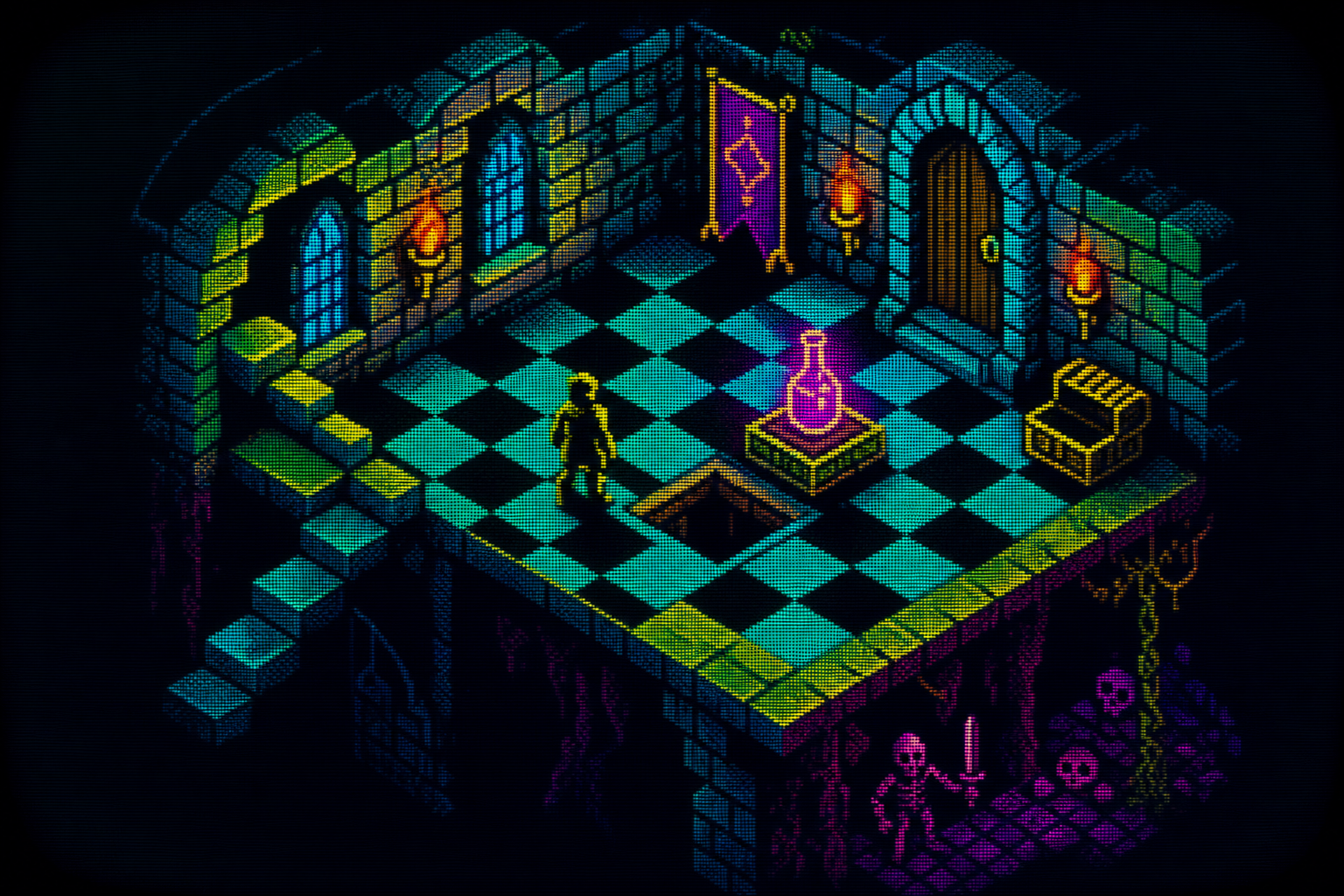
Tag: Isometric Games

  • Knight Lore Review — Does the ZX Spectrum’s Isometric Landmark Still Hold Up in 2026?

    Knight Lore Review — Does the ZX Spectrum’s Isometric Landmark Still Hold Up in 2026?

    Title Knight Lore
    Developer Ultimate Play the Game
    Publisher Ultimate Play the Game
    Year 1984
    Platform focus ZX Spectrum original release
    Genre Isometric adventure
    Score 8 / 10

    Knight Lore is one of those games that gets discussed like a sacred relic, which can make it sound less playable than it really is. Released in 1984 by Ultimate Play the Game, it was the moment the Filmation isometric look stopped feeling like a technical trick and started feeling like a whole new kind of adventure. The real search question in 2026 is not whether it was influential. It obviously was. The better question is whether Knight Lore is still worth loading up if you are coming to it cold, without school-playground mythology doing the heavy lifting.

    The answer is yes — with a polite warning attached. Knight Lore is still atmospheric, inventive and historically fascinating, but it also demands patience in a way modern players may not expect. If Jet Set Willy feels like a pure test of timing and nerve, and Head Over Heels feels like the isometric idea polished into something friendlier, Knight Lore sits in the middle as the awkward, brilliant breakthrough.

    Why the Castle Still Pulls You In

    You play Sabreman, cursed to transform into a werewolf each night unless he can gather the ingredients for a cure inside Castle Wolfenstein’s deeply unfriendly rooms. That premise does a lot of work. It gives the game urgency, mystery and a touch of gothic silliness before you have even solved your first puzzle. More importantly, it turns every room into a little spatial problem. Blocks need pushing, objects need carrying, hazards need reading, and the isometric view makes the whole place feel like a haunted toy box.

    That atmosphere is the secret sauce. Even now, Knight Lore has a mood many early Spectrum games never found. The flick-screen rooms feel stark and hostile, the animation still has real personality, and the werewolf gimmick gives the castle a sense of ritual rather than random challenge. With the recent Spectrum White Edition collector push putting ZX nostalgia back in front of people, this is exactly the kind of landmark game curious newcomers end up searching for.

    The Design Is Smarter Than Its Reputation

    What keeps Knight Lore alive is that it is not just important; it is thoughtfully made. Objects have weight. Rooms have identity. Hazards are arranged with an eye for drama, not just cruelty. When you solve a room, it feels like you understood a place rather than merely survived a pattern. That is why the game still matters. It teaches you to think in space, and it does it years before isometric adventures became normal.

    There is also something satisfying about how uncompromising it is. Knight Lore trusts players to experiment, fail, and slowly decode its rules. In 2026 that can feel almost refreshing. So many modern games over-explain themselves. This one just drops you into a cursed labyrinth and assumes you will get on with it.

    What Feels Old in 2026

    The caveat is simple: Knight Lore can be slow, opaque and occasionally fussy. Judging jumps in isometric space is never perfectly comfortable. Some rooms are more memorable than readable. The day-night timer adds tension, but it can also make exploration feel slightly anxious when you are still learning the map. There is a reason later games refined this formula. Head Over Heels is easier to love immediately because it communicates more cleanly.

    That does not sink the game, but it does place a ceiling on the score. This is not an effortless recommendation in the way a timeless arcade game might be. It is a recommendation for players willing to meet the game halfway and appreciate a little friction as part of the charm.

    Verdict

    Knight Lore remains one of the essential ZX Spectrum games because its ideas still have shape, mood and tension. The controls and perspective can fight you, and the puzzle flow is rougher than later classics, but the castle’s strange logic still works its spell.

    8 / 10. Not the easiest retro revisit, but absolutely one of the most important and still one of the most fascinating. If you want to understand why British 8-bit game design mattered, start here — then decide whether the genre ever truly topped it.

    • Pro tip: Treat every new room as a physical puzzle first and a danger room second. The object layout usually tells you what the game wants.
    • Pro tip: If you bounce off the pace, play in shorter bursts. Knight Lore works better as a thoughtful exploration game than a sprint.
    • Authority link: For release history and platform details, see Wikipedia’s Knight Lore overview.
    • Authority link: For Spectrum-specific archive details, visit the World of Spectrum entry for Knight Lore.

    Where do you rank Knight Lore among the great Spectrum games — as a masterpiece you still replay, or mainly as a brilliant historical turning point?
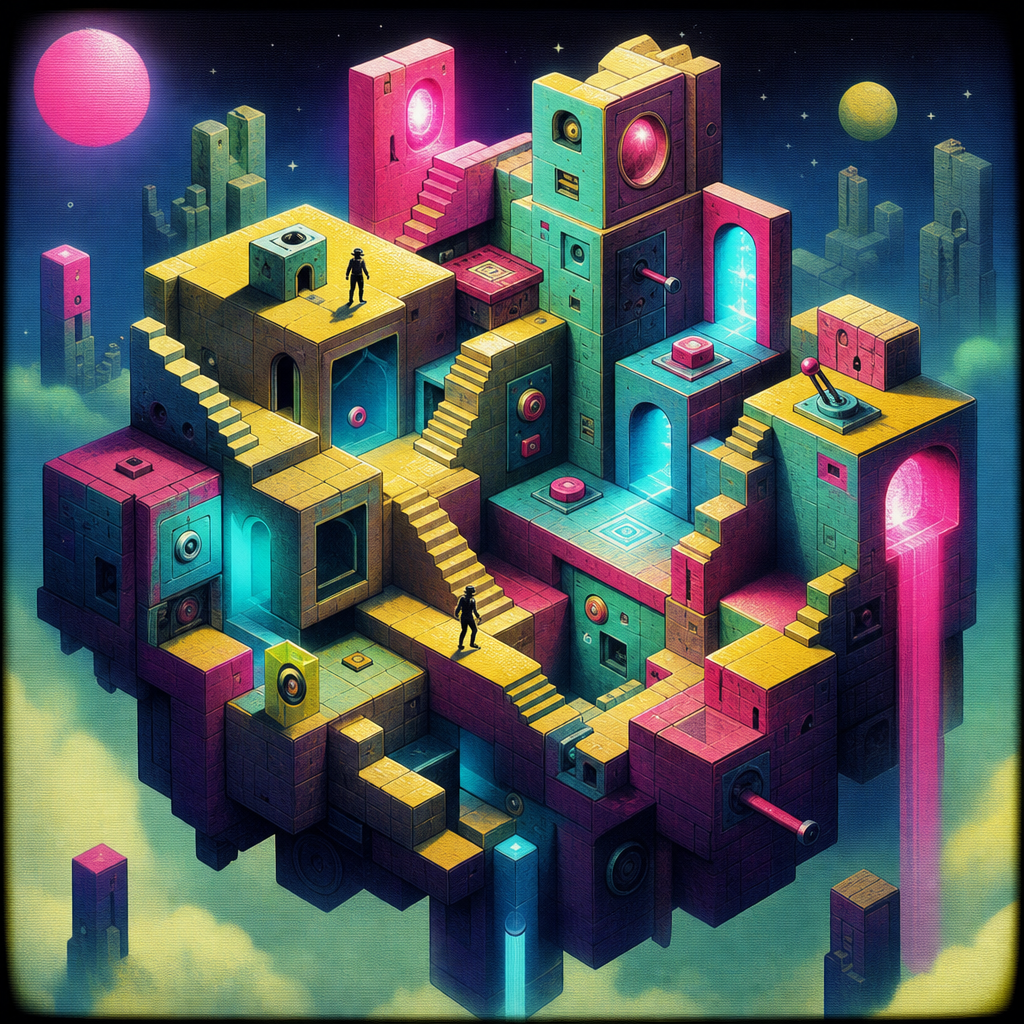
  • Head Over Heels Review — Is the 1987 Isometric Classic Still Worth Playing?

    Head Over Heels Review — Is the 1987 Isometric Classic Still Worth Playing?

    Title Head Over Heels
    Developer Jon Ritman and Bernie Drummond
    Publisher Ocean Software
    Year 1987
    Platform focus ZX Spectrum original release
    Genre Isometric action-adventure
    Score 9 / 10

    Some retro games are important because they invented something. Head Over Heels is rarer than that: it still feels clever. Released by Ocean Software in 1987, Jon Ritman and Bernie Drummond’s isometric adventure drops two captured spies into a surreal empire of floating rooms, cruel stairs and puzzle-box planets. Nearly four decades later, the big search question is not whether it was influential. It obviously was. The better question is whether Head Over Heels is still worth playing in 2026 if you do not already have childhood loyalty doing half the work for it.

    Happily, the answer is yes. More than yes, really. This is one of those rare 8-bit classics that still communicates its design brilliance almost immediately.

    Why the Split-Hero Idea Still Works

    You begin with the two heroes separated. Head jumps high and fires doughnut shots to stun enemies. Heels runs faster, carries items and handles movement challenges differently. Once reunited, they can combine into a single character with both move sets. It is a brilliant hook because the game keeps teaching you through contrast. A room that feels awkward with Head might be trivial with Heels. A puzzle that seems impossible alone becomes obvious once you understand how the duo’s abilities interlock.

    That gives Head Over Heels a kind of generosity that a lot of hard 8-bit games never had. Where Jet Set Willy often feels like a battle against single-screen cruelty, this feels like a conversation with a very mischievous level designer. You still fail plenty, but the failures usually teach rather than merely punish.

    An Isometric World With Real Personality

    The setting matters almost as much as the mechanics. Castle Blacktooth and the surrounding worlds are full of strange enemies, teleports, hidden items and rooms that look like logic puzzles dressed up as dreams. Bernie Drummond’s art gives the whole thing a slightly absurd warmth. Even now, the world feels authored rather than procedural. You can sense human taste in every awkward statue, moving platform and suspiciously inviting corner.

    That is a big part of why the game has aged so much better than many of its peers. The isometric view can still be fiddly, especially when jumps ask you to judge depth by instinct, but the rooms are memorable enough that you learn them as spaces instead of treating them like anonymous stages. It scratches the same historical itch as the wider retro revival: players keep returning to old games when those games offer a point of view, not just nostalgia.

    What Feels Old in 2026

    For all its brilliance, Head Over Heels is still a product of the 1980s. The isometric angle occasionally turns simple movement into theatre. Some hazards are easier to understand after you have already died to them. Progress can also become a little opaque once you are juggling crowns, teleports and backtracking routes across multiple themed worlds.

    That said, these are manageable frustrations rather than deal-breakers. Unlike some revered retro games, Head Over Heels does not survive on museum value alone. Its ideas still carry enough momentum to pull you through the rough edges. Once you start mapping routes in your head and noticing how one ability unlocks another layer of the world, the game becomes extremely hard to leave alone.

    Verdict

    Head Over Heels remains one of the smartest retro games to revisit because its appeal is not locked to technology or childhood memory. It is funny, inventive and structurally elegant in ways that modern indie designers still chase. The controls can wobble, the perspective can be cheeky, and the game occasionally asks for more patience than it deserves. Even so, the underlying design is magnificent.

    9 / 10. If you want proof that 8-bit game design could be imaginative as well as unforgiving, this is an easy recommendation. It is not just a classic by reputation; it is a classic because the ideas are still alive.

    • Pro tip: Revisit old rooms after reuniting the heroes — the game loves hiding elegant shortcuts in places that first looked impossible.
    • Pro tip: Treat every strange object as a clue. Head Over Heels rewards curiosity more than speed.
    • Authority link: For release history and platform details, see Wikipedia’s Head Over Heels overview.
    • Authority link: For a contemporary critical snapshot, the 1987 Zzap!64 review archive is still a fun read.

    Where does Head Over Heels rank for you among the great 8-bit puzzlers — above the famous platformers, or just behind them?