Tag: Driving Games

  • BeamNG.drive PS5 Release Date: What We Know About the 2026 Console Port So Far

    BeamNG.drive PS5 Release Date: What We Know About the 2026 Console Port So Far

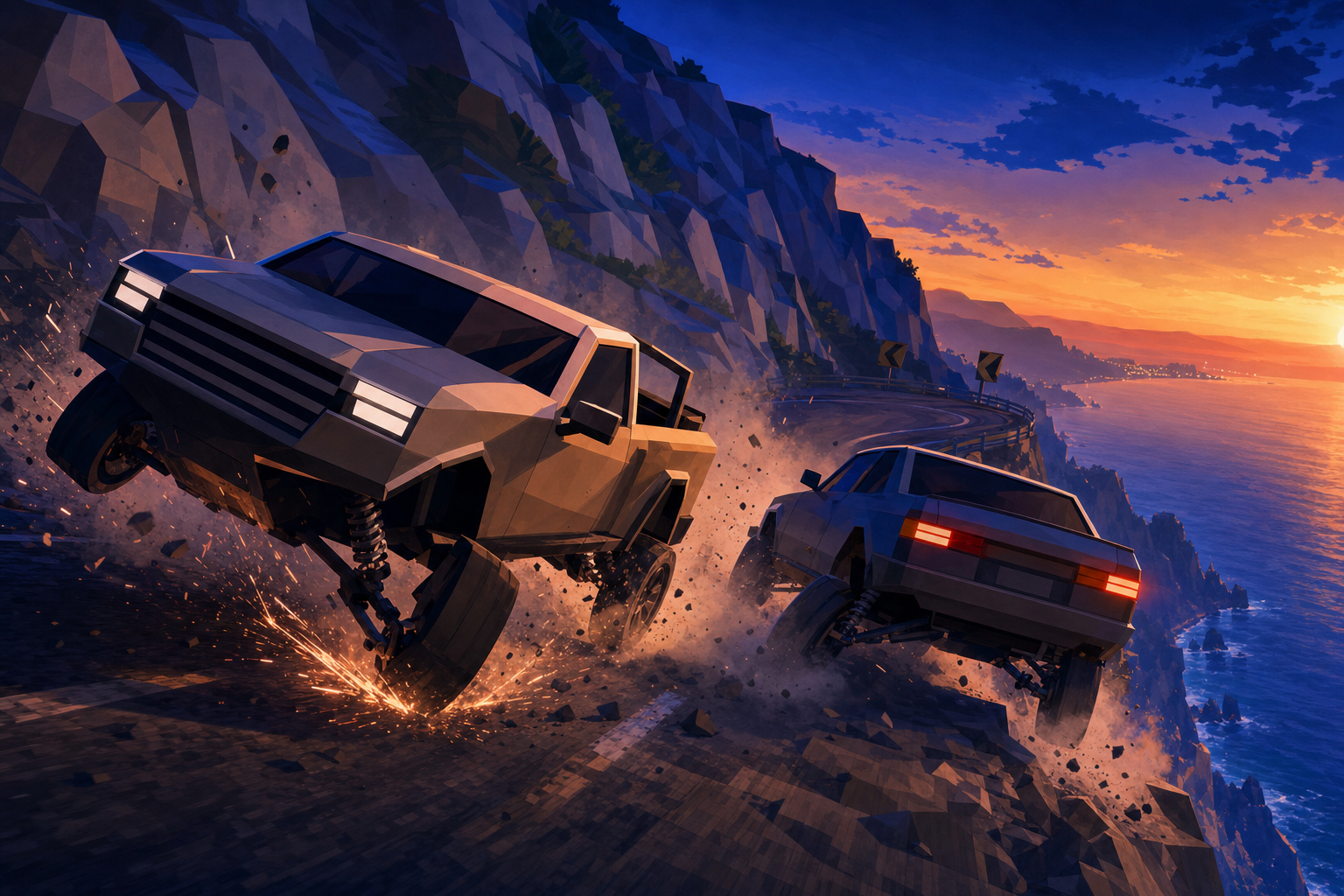
    BeamNG.drive is finally heading to PS5 later in 2026, and that is a bigger deal than a simple “PC game gets console port” headline makes it sound. This thing has lived for years as the chaos gremlin of driving sims: part physics sandbox, part crash laboratory, part YouTube clip factory. The useful question now is not whether people are curious. It is what the PS5 version will actually include, and whether BeamNG can keep its weird, technical magic once it leaves the keyboard-and-mods crowd behind.

    Is there a BeamNG.drive PS5 release date yet?

    Not an exact one. The official line from BeamNG and PlayStation is that BeamNG.drive is coming to PS5 later this year. No day, no month, no pre-order date, and no price confirmed yet. So if you are searching for a firm BeamNG.drive PS5 release date, the honest answer today is simple: 2026, but not more specific than that.

    That may sound annoyingly vague, but it also fits the game. BeamNG is not a tidy annual sequel. It is a long-running simulation project with a reputation for obsessing over systems first and marketing second. That makes the lack of a locked date a little easier to forgive than it would be for a bigger, more polished-by-committee release.

    Why this port matters more than another racing announcement

    What makes BeamNG interesting is not just speed. It is the way the cars behave when everything goes wrong. The studio says every vehicle is simulated as a network of parts that flex, deform, and fail in real time, which is why the crashes look messy instead of canned. That is also why the PS5 version has drawn real attention: if the team can make that level of simulation feel good on a console pad and a living-room setup, this could land as one of the more unusual driving releases on Sony’s system.

    Push Square pitched it as a cult PC favourite finally making the jump, and that feels about right. This is not trying to out-gloss Forza Horizon 6’s big open-road fantasy. It is selling a different kind of thrill: experimentation, destruction, and the joy of seeing a vehicle behave like a badly stressed object instead of a pre-scripted prop.

    What the PS5 version seems likely to include

    Based on the official announcement, PS5 players should expect the core BeamNG mix: open maps, mission-based challenges, lots of vehicle types, and deep tuning options. The other interesting bit is that the console news arrived alongside details for the game’s upcoming v0.39 update on PC. That update includes a major graphics overhaul, Direct3D 12 support, HDR improvements, better atmospheric effects, memory savings, and expanded aerodynamic simulation.

    The key takeaway is that BeamNG is not just dumping an old build onto PS5 and hoping nobody notices. The studio is clearly using this moment to modernise the whole package. If those optimisations really carry across the way BeamNG says they will, the console version could arrive in much better shape than people usually expect from a niche sim port.

    What PS5 players should keep their expectations in check about

    There are still some caveats. Official multiplayer is not launching with this announcement; BeamNG says it is in development, but still some way off. There is also the usual console-port question of how much control depth survives the jump from PC. BeamNG lives on tinkering, and part of its appeal is the rabbit hole. If the PS5 interface smooths that out too much, some of the hardcore audience will grumble.

    Still, there is a platform angle here that works in Sony’s favour. PS5 already has a busy early-summer conversation thanks to the next State of Play showcase, and BeamNG gives the system one more “hang on, that’s coming to console?” talking point. That is useful buzz, especially for players who like driving games but want something rougher, stranger, and more sandbox-driven than the usual track-day polish.

    If BeamNG.drive nails the feel on pad without sanding off its physics-heavy personality, this could become one of PS5’s sleeper hits of the year. If it arrives half-tamed, it will still be fascinating — just maybe not essential.

    Are you hoping BeamNG.drive on PS5 becomes a proper console obsession, or do you think this kind of sim chaos still makes more sense on PC?

    Sources

  • Out Run Review — Is Sega’s 1986 Arcade Racer Still Worth Playing in 2026?

    Out Run Review — Is Sega’s 1986 Arcade Racer Still Worth Playing in 2026?

    Title Out Run
    Developer Sega AM2
    Publisher Sega
    Year 1986
    Platform focus Arcade original release
    Genre Racing game
    Score 9 / 10

    Out Run is one of those retro games people think they remember perfectly: red car, blue sky, palm trees, impossible cool. The real question in 2026 is whether Sega’s arcade road trip still works once the nostalgia fog clears and you judge it next to decades of faster, louder, more detailed racers. If you are searching for whether Out Run is still worth playing today, the short answer is yes — and the better answer is that it still understands something many modern driving games forget.

    Out Run is not really about realism, progression systems, or grinding for better parts. It is about motion, mood and clarity. Every second of Sega AM2’s 1986 classic is built to make you feel like you are escaping into summer at irresponsible speed. That is why it still lands. Like the best old arcade games, it picks a fantasy, strips away the clutter, and commits to it completely. If Bubble Bobble still feels fresh because of its elegant arcade design, Out Run survives for a similar reason: it knows exactly what to keep and what to leave out.

    Why Out Run Still Feels Great

    The first thing Out Run gets right is readability. The road bends hard, traffic weaves unpredictably, and the scenery changes in huge colourful chunks, but the game never becomes visually muddy. You can read the space in front of you almost instantly. That makes mistakes feel fair, even when they are slightly ridiculous. You crashed because you got greedy, not because the game buried you in noise.

    Then there is the sense of rhythm. Out Run is not a circuit racer in the modern sense. It is closer to a playable postcard album, with each fork in the road promising a new backdrop and a slightly different mood. Beaches give way to deserts, mountains, forests and city lights, and each route keeps the same essential fantasy alive while changing the texture around it. That structure still feels clever because it turns short arcade runs into stories. You are not just chasing a time extension; you are choosing what kind of road trip you want.

    The soundtrack helps enormously. Hiroshi Kawaguchi’s music is still a huge part of the game’s charm, and the ability to pick a track at the start remains one of the coolest little touches in arcade history. It sells Out Run as style first, score chase second. That emphasis on mood is a big reason the game still feels modern in spirit, even if the technology obviously is not.

    Where the Age Shows

    Out Run is not flawless in 2026. Collisions can feel abrupt, the traffic patterns occasionally border on rude, and long play sessions reveal how much of the experience is carried by presentation and route variety rather than deep mechanical complexity. If you want precise simulation handling, meaningful car tuning or a giant career ladder, this is the wrong game by design.

    There is also the old arcade truth that success and memorisation are close friends. The more you learn route layouts and hazard timing, the more comfortable the game becomes. That is satisfying, but it can make newcomers bounce off after a few messy runs. Out Run asks for a little patience before its flow state really clicks.

    Why It Matters in 2026

    Part of Out Run’s staying power is historical. It is one of Sega’s defining arcade statements, and you can still feel echoes of it whenever modern racing games try to sell freedom, glamour or pure scenic momentum. But history alone does not keep a game alive. What keeps Out Run alive is that it remains immediately enjoyable. You can boot it up, understand its fantasy in seconds, and have a good time before your coffee cools down.

    That matters in the current retro wave. We keep seeing old series and aesthetics come back because players still want games with a strong point of view, whether that means watching Sega’s classic brands circle back into relevance or revisiting arcade-era design through modern collections and ports. Out Run is a reminder that slick presentation and mechanical focus were never opposites. The best retro games did both.

    Verdict: Out Run is still an easy recommendation. It is short, stylish, instantly readable and far more transportive than many bigger racing games. A few harsh collisions and some arcade-era repetition stop it from feeling completely timeless, but the fantasy is still magnificent.

    If you revisit Out Run now, do you still play for the branching routes and soundtrack, or do you think later arcade racers left it behind?

    Further reading: MobyGames entry for Out Run | Wikipedia overview of Out Run