Title Knight Lore
Developer Ultimate Play the Game
Publisher Ultimate Play the Game
Year 1984
Platform focus ZX Spectrum original release
Genre Isometric adventure
Score 8 / 10
Knight Lore is one of those games that gets discussed like a sacred relic, which can make it sound less playable than it really is. Released in 1984 by Ultimate Play the Game, it was the moment the Filmation isometric look stopped feeling like a technical trick and started feeling like a whole new kind of adventure. The real search question in 2026 is not whether it was influential. It obviously was. The better question is whether Knight Lore is still worth loading up if you are coming to it cold, without school-playground mythology doing the heavy lifting.
The answer is yes — with a polite warning attached. Knight Lore is still atmospheric, inventive and historically fascinating, but it also demands patience in a way modern players may not expect. If Jet Set Willy feels like a pure test of timing and nerve, and Head Over Heels feels like the isometric idea polished into something friendlier, Knight Lore sits in the middle as the awkward, brilliant breakthrough.
Why the Castle Still Pulls You In
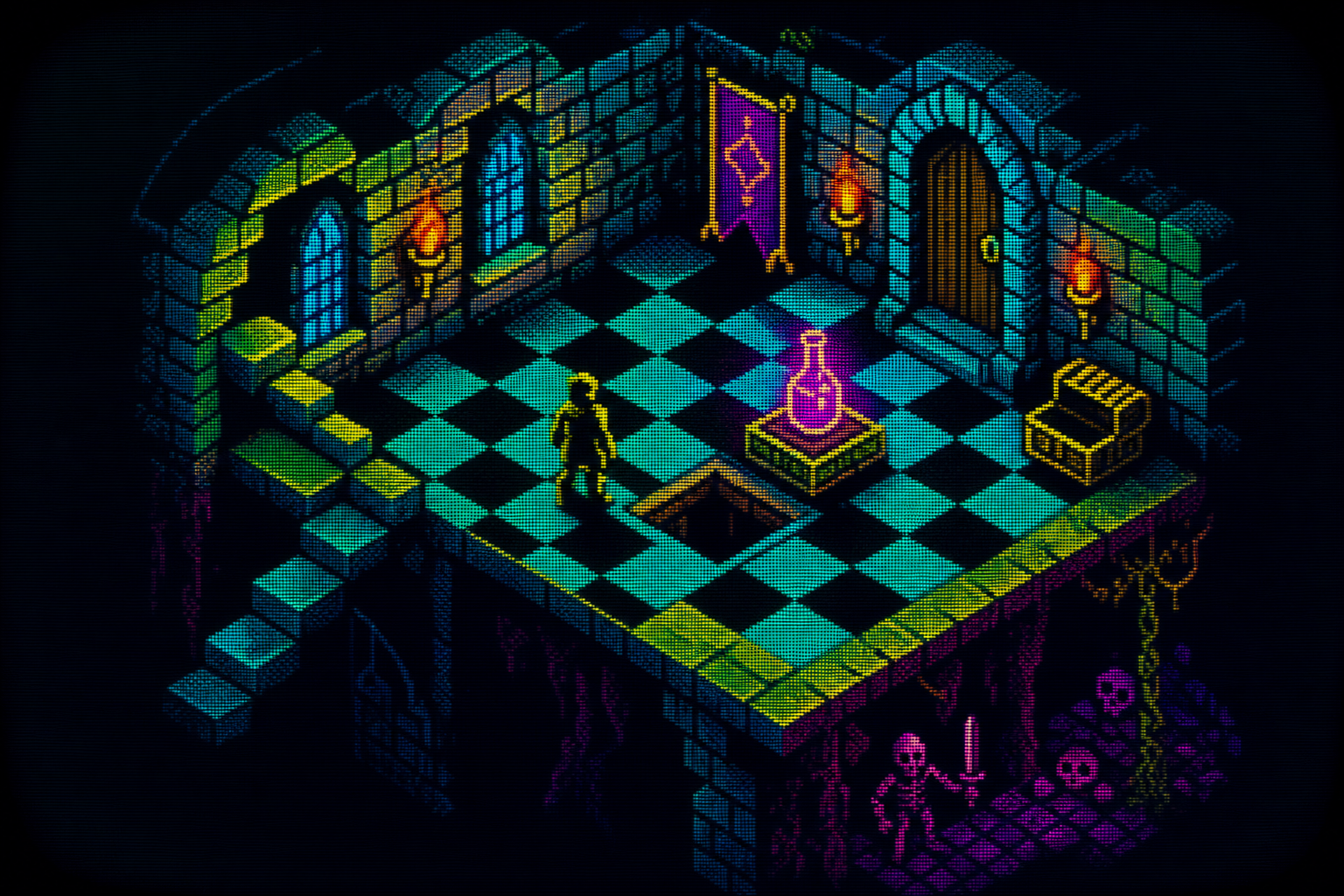
You play Sabreman, cursed to transform into a werewolf each night unless he can gather the ingredients for a cure inside Castle Wolfenstein’s deeply unfriendly rooms. That premise does a lot of work. It gives the game urgency, mystery and a touch of gothic silliness before you have even solved your first puzzle. More importantly, it turns every room into a little spatial problem. Blocks need pushing, objects need carrying, hazards need reading, and the isometric view makes the whole place feel like a haunted toy box.
That atmosphere is the secret sauce. Even now, Knight Lore has a mood many early Spectrum games never found. The flick-screen rooms feel stark and hostile, the animation still has real personality, and the werewolf gimmick gives the castle a sense of ritual rather than random challenge. With the recent Spectrum White Edition collector push putting ZX nostalgia back in front of people, this is exactly the kind of landmark game curious newcomers end up searching for.
The Design Is Smarter Than Its Reputation
What keeps Knight Lore alive is that it is not just important; it is thoughtfully made. Objects have weight. Rooms have identity. Hazards are arranged with an eye for drama, not just cruelty. When you solve a room, it feels like you understood a place rather than merely survived a pattern. That is why the game still matters. It teaches you to think in space, and it does it years before isometric adventures became normal.
There is also something satisfying about how uncompromising it is. Knight Lore trusts players to experiment, fail, and slowly decode its rules. In 2026 that can feel almost refreshing. So many modern games over-explain themselves. This one just drops you into a cursed labyrinth and assumes you will get on with it.
What Feels Old in 2026
The caveat is simple: Knight Lore can be slow, opaque and occasionally fussy. Judging jumps in isometric space is never perfectly comfortable. Some rooms are more memorable than readable. The day-night timer adds tension, but it can also make exploration feel slightly anxious when you are still learning the map. There is a reason later games refined this formula. Head Over Heels is easier to love immediately because it communicates more cleanly.
That does not sink the game, but it does place a ceiling on the score. This is not an effortless recommendation in the way a timeless arcade game might be. It is a recommendation for players willing to meet the game halfway and appreciate a little friction as part of the charm.
Verdict
Knight Lore remains one of the essential ZX Spectrum games because its ideas still have shape, mood and tension. The controls and perspective can fight you, and the puzzle flow is rougher than later classics, but the castle’s strange logic still works its spell.
8 / 10. Not the easiest retro revisit, but absolutely one of the most important and still one of the most fascinating. If you want to understand why British 8-bit game design mattered, start here — then decide whether the genre ever truly topped it.
- Pro tip: Treat every new room as a physical puzzle first and a danger room second. The object layout usually tells you what the game wants.
- Pro tip: If you bounce off the pace, play in shorter bursts. Knight Lore works better as a thoughtful exploration game than a sprint.
- Authority link: For release history and platform details, see Wikipedia’s Knight Lore overview.
- Authority link: For Spectrum-specific archive details, visit the World of Spectrum entry for Knight Lore.
Where do you rank Knight Lore among the great Spectrum games — as a masterpiece you still replay, or mainly as a brilliant historical turning point?