Tag: Arcade Games

  • R-Type Review — Is Irem’s 1987 Arcade Shooter Still Worth Playing in 2026?

    R-Type Review — Is Irem’s 1987 Arcade Shooter Still Worth Playing in 2026?

    Title R-Type
    Developer Irem
    Publisher Irem
    Year 1987
    Platform focus Arcade original release
    Genre Shoot ’em up
    Score 9 / 10

    R-Type is one of those arcade games that can still make modern shooters look oddly shy. The question in 2026 is not whether Irem’s 1987 classic is historically important. It obviously is. The better question is whether it still feels worth playing once you strip away the reputation, the ports, and the reverence. If you are searching for whether R-Type still holds up, the short answer is yes — but only if you are willing to meet it on its own hostile terms.

    What makes R-Type survive is not just difficulty. Plenty of old shooters are hard and forgettable. What keeps this one alive is how deliberate it feels. Every enemy wave, every wall, every horrible moving obstruction seems placed to test a specific bad habit. It has the same kind of design confidence that keeps Out Run so readable and immediate, even though the mood here is far colder and meaner.

    Why R-Type Still Feels Brilliant

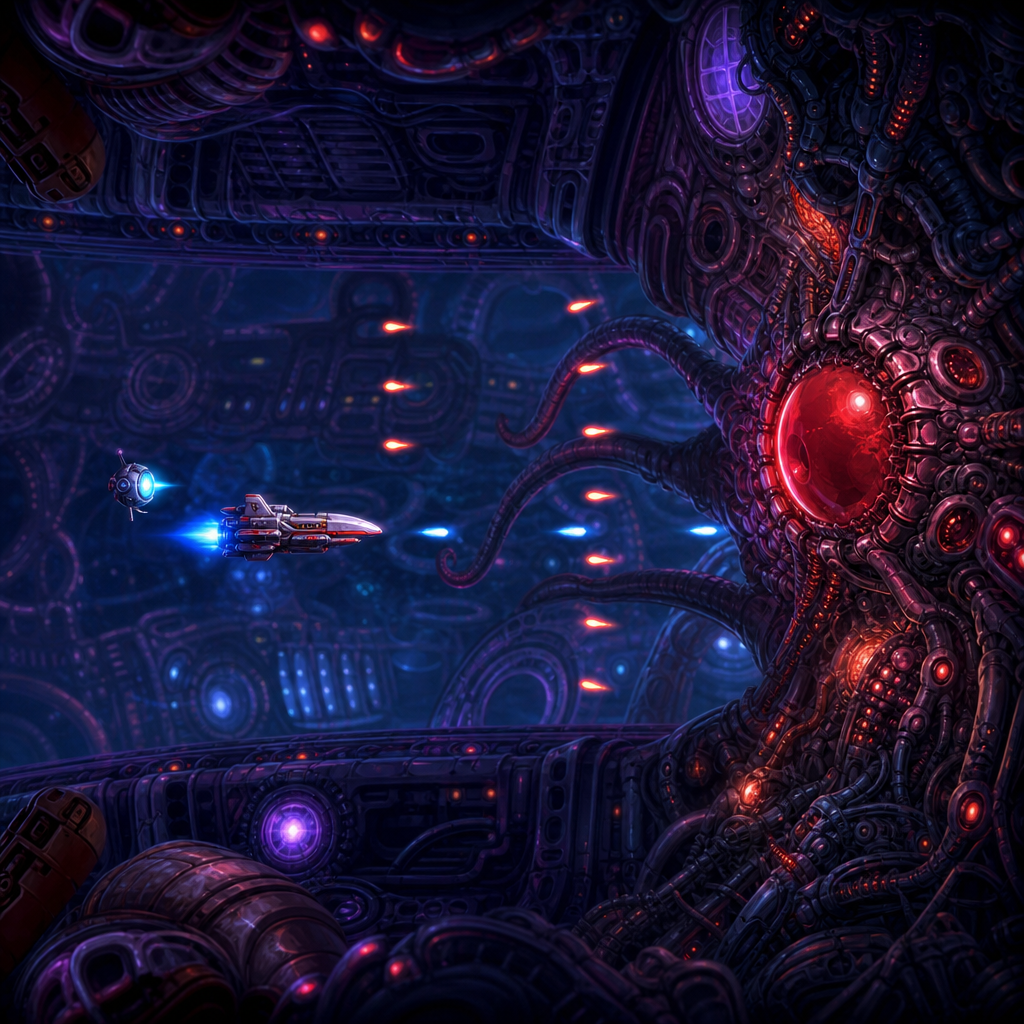
    The obvious hook is the Force pod. Even now, it remains one of the smartest ideas in arcade shooting. You can attach it to the front or rear of your ship, fire it off as a shield, or use it to hit awkward targets while you squeeze through some biomechanical death tunnel. It gives R-Type a tactical layer many side-scrolling shooters still lack. You are not just dodging and spraying bullets; you are constantly deciding how to position your offence and defence at the same time.

    The stage design is just as important. R-Type does not feel like a random parade of space monsters. Its levels have identity. The first stage teaches you patience, the battleship stage turns terrain into a threat, and later areas become grotesque endurance tests where panic gets you killed faster than enemy fire. Like Bubble Bobble, it understands how much personality matters to arcade longevity. You remember rooms, patterns and nasty surprises because the game presents them with real theatrical menace.

    It also still looks superb. The H.R. Giger-adjacent biomechanical art direction gives R-Type a grim, fleshy weirdness that separates it from more colourful arcade contemporaries. There is a real sense of intrusion, like you are forcing your way through a living machine that wants you gone. In 2026, that atmosphere still does a lot of heavy lifting.

    Where It Punches Back

    This is not a generous game. R-Type is built around checkpoint recovery, which means death can dump you back into situations that feel almost impossible until you learn the exact escape plan. That is part of the game’s legend, but it is also the part most likely to send new players straight back out the door. Some shooters age into comfort food. R-Type ages into a stern little exam.

    Its pacing can also feel oppressive if you come in expecting constant power fantasy. R-Type often rewards restraint more than aggression. Moving too eagerly, grabbing the wrong power-up path, or failing to think a few seconds ahead usually ends badly. That makes success satisfying, but it can make the early learning phase feel punishing rather than inviting.

    Why It Still Matters in 2026

    R-Type still matters because so many later shooters borrowed from it without matching its sense of intent. The Force system, the environmental hazards, the boss spectacle, the oppressive stage rhythm — all of it helped define what a serious arcade shooter could feel like. It is one of those retro games that does not merely deserve respect; it still demands attention.

    There is also a useful search-intent reason it keeps coming up. Players hunting for the best classic shmups, the hardest arcade shooters, or a retro game that still feels genuinely tense will find exactly what they are looking for here. In a moment where retro recommendations can get a bit too cosy, R-Type is a healthy reminder that old games were not always trying to make you comfortable.

    Verdict: R-Type is still one of the essential arcade shooters. It looks incredible, its core mechanic remains brilliant, and its best stages feel like playable stress sculptures. The checkpoint cruelty is real, and that will absolutely bounce some players off, but if you want a retro shooter with teeth, this is still near the top of the list.

    9 / 10. Difficult, unforgiving, and still magnificent.

    If you go back to R-Type now, does the challenge feel thrilling, or does the checkpoint brutality push it over the line?

    Further reading: MobyGames entry for R-Type | Wikipedia overview of R-Type

  • Out Run Review — Is Sega’s 1986 Arcade Racer Still Worth Playing in 2026?

    Out Run Review — Is Sega’s 1986 Arcade Racer Still Worth Playing in 2026?

    Title Out Run
    Developer Sega AM2
    Publisher Sega
    Year 1986
    Platform focus Arcade original release
    Genre Racing game
    Score 9 / 10

    Out Run is one of those retro games people think they remember perfectly: red car, blue sky, palm trees, impossible cool. The real question in 2026 is whether Sega’s arcade road trip still works once the nostalgia fog clears and you judge it next to decades of faster, louder, more detailed racers. If you are searching for whether Out Run is still worth playing today, the short answer is yes — and the better answer is that it still understands something many modern driving games forget.

    Out Run is not really about realism, progression systems, or grinding for better parts. It is about motion, mood and clarity. Every second of Sega AM2’s 1986 classic is built to make you feel like you are escaping into summer at irresponsible speed. That is why it still lands. Like the best old arcade games, it picks a fantasy, strips away the clutter, and commits to it completely. If Bubble Bobble still feels fresh because of its elegant arcade design, Out Run survives for a similar reason: it knows exactly what to keep and what to leave out.

    Why Out Run Still Feels Great

    The first thing Out Run gets right is readability. The road bends hard, traffic weaves unpredictably, and the scenery changes in huge colourful chunks, but the game never becomes visually muddy. You can read the space in front of you almost instantly. That makes mistakes feel fair, even when they are slightly ridiculous. You crashed because you got greedy, not because the game buried you in noise.

    Then there is the sense of rhythm. Out Run is not a circuit racer in the modern sense. It is closer to a playable postcard album, with each fork in the road promising a new backdrop and a slightly different mood. Beaches give way to deserts, mountains, forests and city lights, and each route keeps the same essential fantasy alive while changing the texture around it. That structure still feels clever because it turns short arcade runs into stories. You are not just chasing a time extension; you are choosing what kind of road trip you want.

    The soundtrack helps enormously. Hiroshi Kawaguchi’s music is still a huge part of the game’s charm, and the ability to pick a track at the start remains one of the coolest little touches in arcade history. It sells Out Run as style first, score chase second. That emphasis on mood is a big reason the game still feels modern in spirit, even if the technology obviously is not.

    Where the Age Shows

    Out Run is not flawless in 2026. Collisions can feel abrupt, the traffic patterns occasionally border on rude, and long play sessions reveal how much of the experience is carried by presentation and route variety rather than deep mechanical complexity. If you want precise simulation handling, meaningful car tuning or a giant career ladder, this is the wrong game by design.

    There is also the old arcade truth that success and memorisation are close friends. The more you learn route layouts and hazard timing, the more comfortable the game becomes. That is satisfying, but it can make newcomers bounce off after a few messy runs. Out Run asks for a little patience before its flow state really clicks.

    Why It Matters in 2026

    Part of Out Run’s staying power is historical. It is one of Sega’s defining arcade statements, and you can still feel echoes of it whenever modern racing games try to sell freedom, glamour or pure scenic momentum. But history alone does not keep a game alive. What keeps Out Run alive is that it remains immediately enjoyable. You can boot it up, understand its fantasy in seconds, and have a good time before your coffee cools down.

    That matters in the current retro wave. We keep seeing old series and aesthetics come back because players still want games with a strong point of view, whether that means watching Sega’s classic brands circle back into relevance or revisiting arcade-era design through modern collections and ports. Out Run is a reminder that slick presentation and mechanical focus were never opposites. The best retro games did both.

    Verdict: Out Run is still an easy recommendation. It is short, stylish, instantly readable and far more transportive than many bigger racing games. A few harsh collisions and some arcade-era repetition stop it from feeling completely timeless, but the fantasy is still magnificent.

    If you revisit Out Run now, do you still play for the branching routes and soundtrack, or do you think later arcade racers left it behind?

    Further reading: MobyGames entry for Out Run | Wikipedia overview of Out Run

  • Bubble Bobble Review — Is Taito’s 1986 Arcade Co-op Classic Still Worth Playing?

    Bubble Bobble Review — Is Taito’s 1986 Arcade Co-op Classic Still Worth Playing?

    Title Bubble Bobble
    Developer Taito
    Publisher Taito
    Year 1986
    Platform focus Arcade original release
    Genre Single-screen platformer
    Score 9 / 10

    Bubble Bobble is one of those retro games that can look almost too cheerful to be dangerous. Bright colours, bouncy music, little monsters, fruit everywhere — it practically dares you to underestimate it. The real search question in 2026 is not whether Taito’s 1986 arcade hit is important. It is whether it still feels worth your time when you have no childhood attachment to it and a thousand other “all-time classics” fighting for your attention.

    The answer is an easy yes. Bubble Bobble still rules because it understands the difference between simple and shallow. The basic loop — blow bubbles, trap enemies, pop them, move on — is readable in seconds, but the game keeps finding new ways to turn that tiny rule set into panic, greed and slapstick teamwork. If Knight Lore asks you to admire a breakthrough and the current retro revival reminds us why old games are back in fashion, Bubble Bobble is the cleaner answer to why so many people still love arcade-era design: it is immediate, funny and absurdly replayable.

    Why the Bubble-Popping Loop Still Works

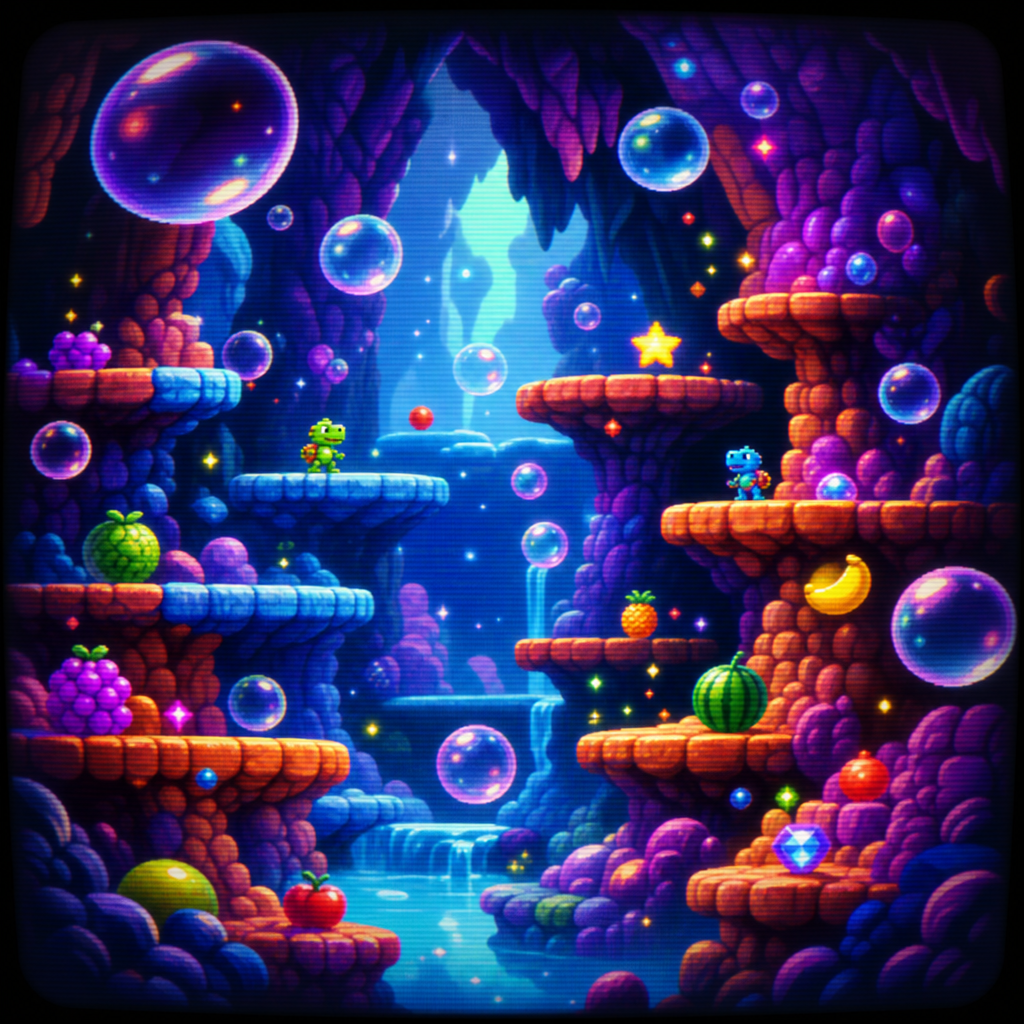
    The genius of Bubble Bobble is that every level feels like a tiny room-sized argument between control and chaos. You can trap enemies in bubbles, ride bubbles to awkward places, herd monsters into better positions, or panic and make a complete mess of things. Because each stage is only a screen wide, the consequences of your decisions are always visible. That gives the game a lovely snap. You are never far from either a clever recovery or a stupid death.

    It also helps that Taito loaded the game with personality. Enemies wobble about like cartoon pests rather than abstract hitboxes. Bonus items shower out in a way that makes greed feel irresistible. The stages have a toybox quality to them, with ladders, platforms, gaps and little traps arranged just neatly enough to invite experimentation. Even now, the whole thing feels alive in a way many early platformers do not.

    And then there is co-op. Played with two people, Bubble Bobble becomes one of the great arcade friendship tests: half coordination, half accidental sabotage. One player sets up a neat trap, the other barges in for the points, and suddenly everybody is improvising. That energy is a huge part of why the game aged so well. It is not just a strong solo score chaser; it is one of the most welcoming multiplayer arcade games of its era.

    What Makes It Special in 2026

    What really stands out today is how modern the game’s readability feels. The goal is obvious, the feedback is instant, and each round gives you a quick little story: who messed up, who got greedy, who stole the melon, who barely escaped the angry invincible enemy that turns up when you dawdle. A lot of retro games earn respect more easily than affection. Bubble Bobble earns both.

    It also sits in a sweet spot for current retro search intent. People looking for the best co-op arcade games, the best pick-up-and-play retro platformers, or just a classic that still works in short sessions will find exactly what they want here. That is part of why the series has survived across ports, compilations and modern reissues. The core idea still travels beautifully.

    There is even a little extra mystique around the arcade original thanks to its secrets and alternate endings. Bubble Bobble does not just clear 100 stages and leave. It nudges you into sharing rumours, replaying levels and treating it like more than a one-credit toy. That playground energy still matters.

    What Feels Old in 2026

    The main drawback is that the difficulty curve can turn from playful to rude without much warning. Late-game enemy speed, projectile clutter and awkward stage layouts can make the final stretch feel more exhausting than elegant. Solo play is also noticeably less magical. Still good, absolutely — but a big part of the game’s charm comes from co-op chaos, and you feel that absence when playing alone.

    You also need to be slightly careful about which version you play. Bubble Bobble has been ported everywhere, and not every home conversion captures the arcade game’s exact rhythm or feel. If you want the cleanest first impression, start with the arcade original or a faithful modern collection.

    Verdict

    Bubble Bobble remains one of the best arcade platformers ever made because its design is generous without being soft. It is easy to read, hard to master, brilliant with friends and still packed with enough charm to make failure funny instead of miserable.

    9 / 10. If you want a retro game that still feels instantly alive in 2026, this is one of the safest recommendations on the board. Few 1980s arcade games balance accessibility, depth and pure mischief this well.

    • Pro tip: Play two-player if you can. The game’s reputation makes much more sense once the screen fills with shared panic.
    • Pro tip: Do not chase every bonus item blindly. Space control matters more than greed once the later rounds start getting nasty.
    • Authority link: For release history and platform details, see Wikipedia’s Bubble Bobble overview.
    • Authority link: For arcade-version oddities and hidden development leftovers, see The Cutting Room Floor’s Bubble Bobble (Arcade) page.

    Where do you rank Bubble Bobble among arcade co-op greats — all-time classic, or a lovely sugar rush that fades before the end?